

By: Clement Bonnerot
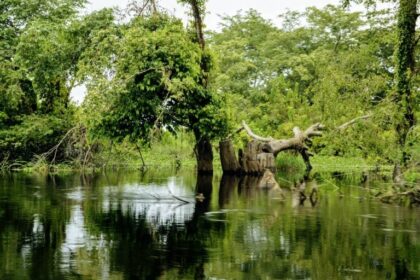
DAKAR, Feb 24 (Reuters) – Two large lakes in the Democratic Republic of Congo are releasing carbon that has been locked away for thousands of years in surrounding peatlands, scientists said, in what could pose a threat to climate stability.
Tropical peatlands, which play a crucial role in climate regulation, were assumed to keep their carbon securely stored for millennia, according to researchers from the ETH Zurich university who published their findings in Nature Geoscience.
However, the researchers from ETH Zurich found that up to 40% of carbon dioxide emissions from Lakes Mai Ndombe and Tumba come from ancient peat deposits, some over 3,000 years old, rather than recent plant matter.
“We were surprised to find that ancient carbon is being released via the lake,” lead author Travis Drake said in a statement.
“The carbon reservoir has a leak, so to speak, from which ancient carbon is escaping,” co-author Matti Barthel said.
It remains one of the world’s least-studied major forest regions, and researchers say far more work is needed to understand how its vast ecosystems are changing.