
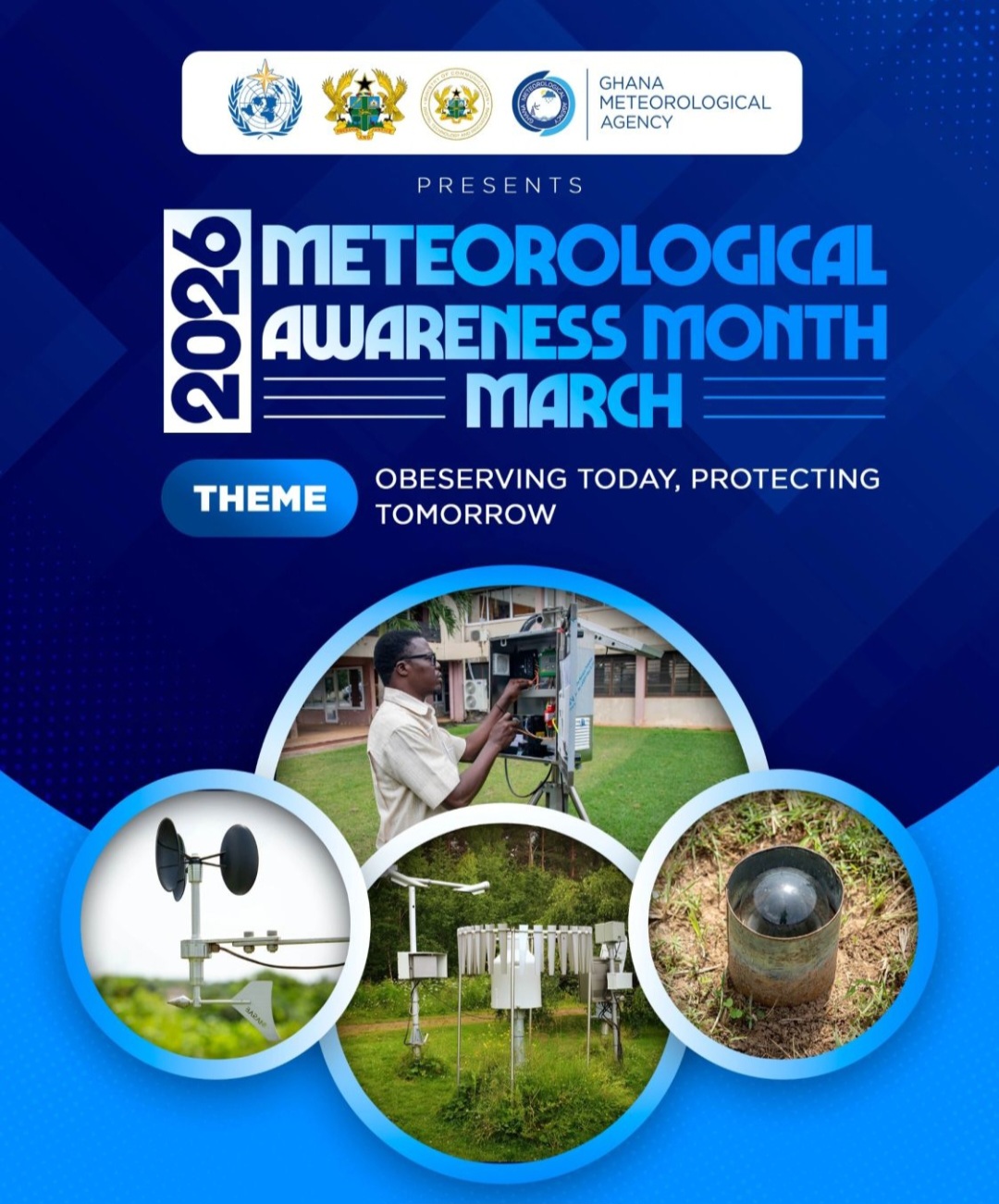
The Ghana Meteorological Agency (GMet) is taking proactive steps to promote climate resilience in the country through its commemoration of Meteorological Awareness Month 2026.
With the theme “Observing Today, Protecting Tomorrow”, GMet is highlighting the critical role of weather and climate information in safeguarding lives, supporting livelihoods, and driving national development.
Accurate meteorological services are essential to various sectors, including agriculture, aviation, disaster risk reduction, health, water resources, and infrastructure planning, and GMet is working to deepen public understanding of these services and promote safety and preparedness.
GMet is calling on corporate institutions, development partners, research organizations, civil society groups, and stakeholders to support this national awareness campaign through partnerships, sponsorships, and collaborative initiatives.
The agency’s efforts are expected to contribute to strengthening public weather education, enhancing early warning and preparedness messaging, and promoting climate resilience and socio-economic development.
In recent years, Ghana has experienced increased climate-related hazards, including floods, droughts, and storms, which have had devastating impacts on communities and the economy. GMet’s initiatives aim to address these challenges by providing accurate and timely weather and climate information to support decision-making and planning.
GMet has made significant progress in improving weather forecasting accuracy, with its general daily weather forecast accuracy improving to over 90%. The agency has also introduced new tools, such as the Forecasting African Storms App (FASTA) and the Weather Information and Dissemination System (WIDS), to enhance public awareness and preparedness.
“Weather and climate information play a critical role in safeguarding lives, supporting livelihoods, and driving national development,” said a GMet official. “We are committed to working with stakeholders to promote climate resilience and socio-economic development in Ghana.”
GMet’s initiatives are crucial for Ghana’s development, and support from stakeholders is vital. The agency’s efforts will help promote climate resilience and socio-economic development, ultimately contributing to a more resilient nation.
Background
The Ghana Meteorological Agency (GMet) is responsible for providing weather and climate services to support national development. GMet’s mandate includes providing accurate and timely weather forecasts, warnings, and advisories to support decision-making and planning in various sectors, including agriculture, aviation, disaster risk reduction, health, water resources, and infrastructure planning.
Source: www.climatewatchonline.com