
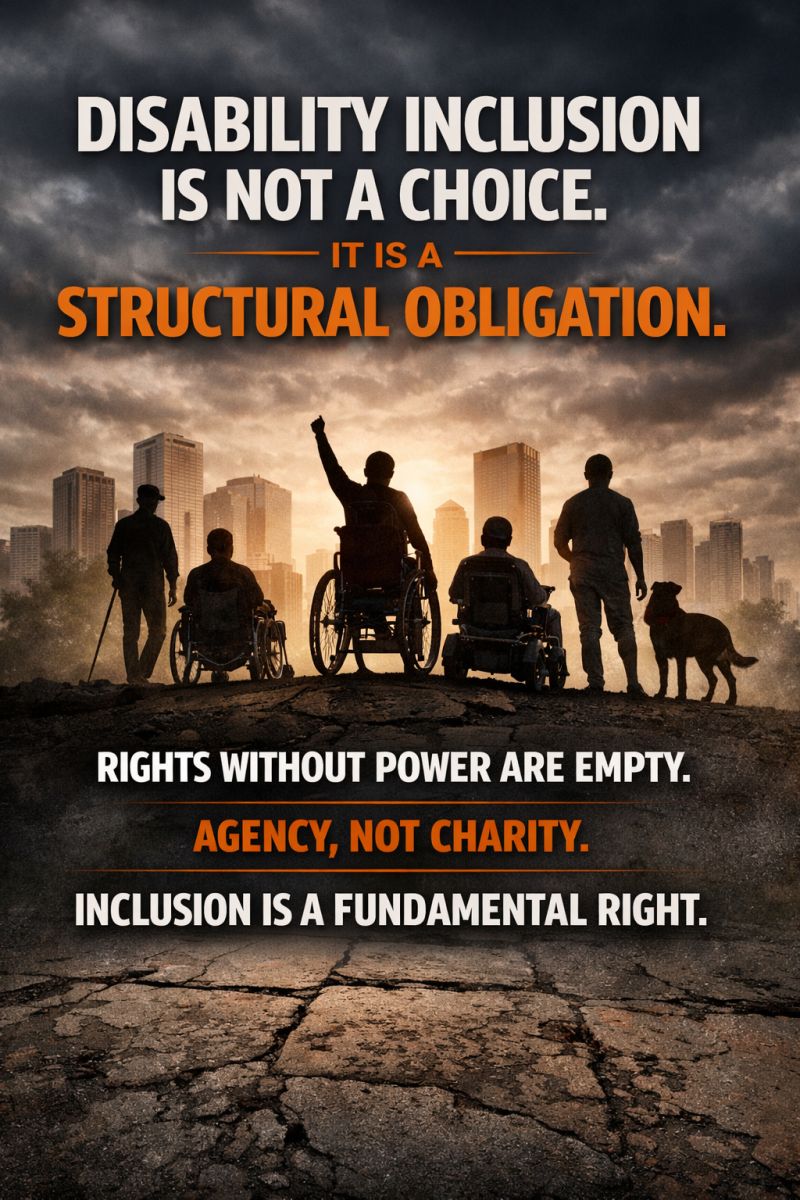
As the climate crisis intensifies, the conversation around resilience and adaptation is rightly gaining urgency. Yet one critical group remains consistently underrepresented in climate planning and decision-making: persons with disabilities. For *Climate Watch*, this is not a marginal issue—it is central to building truly inclusive and effective climate solutions.
Across Africa, and particularly in countries like Ghana, persons with disabilities are disproportionately exposed to climate risks. Many depend on climate-sensitive livelihoods such as smallholder farming, informal trading, and natural resource-based activities. When floods, droughts, or heatwaves strike, they often face compounded challenges—limited mobility, restricted access to early warning systems, and inadequate social protection.
Despite these realities, climate policies and programmes frequently overlook disability inclusion. Early warning messages are not always accessible to the visually or hearing impaired. Evacuation plans rarely consider mobility constraints. Climate finance mechanisms seldom prioritise targeted support for persons with disabilities. This gap is not just a policy oversight—it is a failure of equity.
Inclusion must move beyond rhetoric. Governments, development partners, and civil society must intentionally integrate disability considerations into climate strategies at every level. This means designing accessible early warning systems, ensuring representation of persons with disabilities in climate decision-making processes, and investing in adaptive technologies and livelihood support tailored to their needs.
There is also a need to strengthen collaboration with disability-focused organisations, which are often best positioned to understand and articulate the priorities of their communities. Their voices should not be an afterthought but a guiding force in shaping climate responses.
Equally important is the role of data. Disaggregated data on disability and climate vulnerability remains limited, making it difficult to design targeted interventions. Without evidence, inclusion risks becoming symbolic rather than transformative.
However, inclusion is not only about vulnerability—it is also about agency. Persons with disabilities are innovators, leaders, and active contributors to climate solutions. From community-based adaptation initiatives to advocacy and awareness campaigns, they are already driving change. Recognising and supporting this leadership is essential.
Climate justice demands that no one is left behind. As countries scale up their commitments under frameworks such as the Paris Agreement, inclusion must be embedded as a core principle, not an optional add-on.
The path forward is clear: inclusive climate action is stronger, fairer, and more sustainable. For Ghana and the broader African continent, ensuring that persons with disabilities are fully integrated into climate planning is not just a moral imperative—it is a practical necessity for resilience and long-term development.
If climate action is to succeed, it must work for everyone.
Source: www.climatewatchonline.com