
Accra – As climate change tightens its grip on Ghana, threatening food production, water security, coastal livelihoods and public health, the question of how the country finances its climate response has become increasingly urgent. Climate finance – the flow of funds aimed at reducing greenhouse‑gas emissions and strengthening resilience against climate impacts – sits at the heart of Ghana’s climate agenda.
Between 2019 and 2020, an annual average of about US $830 million was tracked in climate finance for Ghana, according to the Center for Opportunities and Rural Development (CORD Ghana). This represents only five to nine per cent of the estimated investment needed to meet the country’s Paris Agreement targets.
Ghana’s climate finance architecture draws from domestic budgets, multilateral development partners and international climate funds.
However, CORD Ghana notes that the bulk of tracked climate finance continues to originate from the public sector, with limited private sector participation.
To improve coordination and resource mobilisation, the Ministry of Finance has established a Climate Financing Division, tasked with managing climate-related funds, aligning national priorities with global climate goals, and developing bankable projects to attract investors.
Ghana has also secured significant international support. A US $120 million Green Climate Fund (GCF) programme, with US $70 million earmarked for Ghana, is funding climate‑adaptation projects in the North East and Upper West regions, focusing on agro‑ecosystem resilience, early‑warning systems and water storage. The UNDP‑assisted GCF Readiness Programme is helping build institutional capacity and develop climate‑investment plans.
In a landmark move, Ghana became the first African nation to issue carbon credits compliant with the Paris Agreement, transferring 11,733 tonnes of offsets and opening new opportunities for international carbon trading. Public‑private partnerships are emerging as a key strategy to unlock private capital, such as the collaboration between Fidelity Bank Ghana and the Global Center on Adaptation aimed at integrating climate‑risk considerations into financial products.
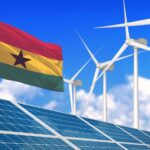
Looking ahead, Ghana’s Climate Prosperity Plan – unveiled at COP29 – seeks to merge climate action with economic growth, targeting the mobilisation of US $75‑76 billion by 2050 through investments in renewable energy, sustainable infrastructure, blended finance and public‑private partnerships. Analysts describe the plan as bold but caution that turning vision into action will require sustained political commitment and credible financing mechanisms.
Despite these gains, several challenges persist. The adaptation funding gap remains large, private‑sector engagement is limited by perceived risks and weak project pipelines, and debates over carbon taxation raise concerns about impacts on low‑income households. Moreover, developed nations’ unfulfilled climate‑finance commitments continue to be a point of contention at international forums.
Observers note that Ghana’s growing leadership on climate issues – highlighted by its election as incoming chair of the Climate Vulnerable Forum and the V20 Group of Finance Ministers – offers an opportunity to advocate for fairer and more accessible climate finance for vulnerable economies.
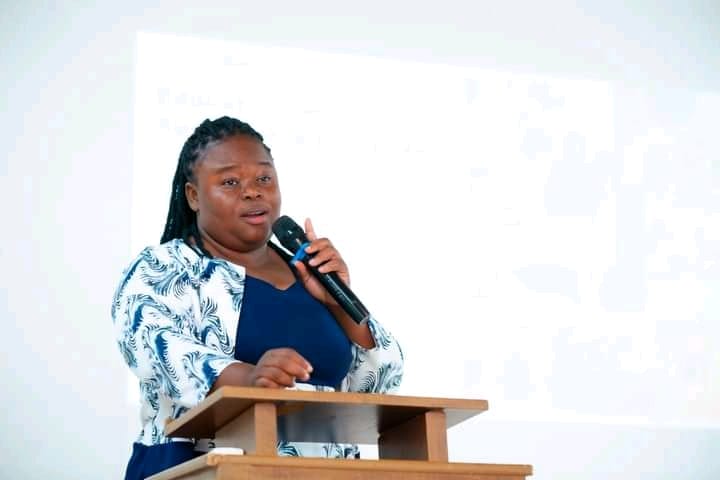
The writer Esther Nyamekye Opoku, is Co‑Founder and Head of Programs & Policy at the Center for Opportunities and Rural Development (CORD Ghana).
Source: www.climatewatchonline.com