
Accra’s traffic crisis is no longer an inconvenience: it is a national productivity emergency.
Every day, millions of Ghanaians lose valuable hours stuck in congestion, arriving late to work, school, and essential services. Yet, despite the severity of the problem, Ghana continues to treat mobility failure as a temporary disruption rather than a structural breakdown.
Nearly 70% of Ghanaians depend on public transport, but the state has largely abdicated its responsibility to provide a functional mass transit system. Instead, urban mobility has been surrendered to an informal, union-dominated system, particularly the GPRTU, which controls an estimated 85–90% of the market with limited accountability, weak regulation, and minimal planning.
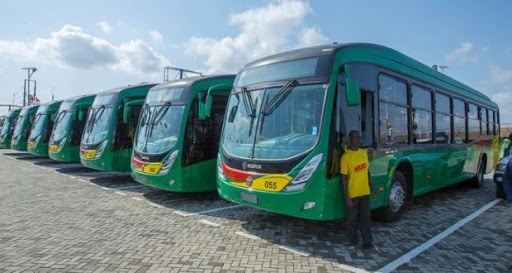
Recent announcements by the Minister for Transport – to procure new buses, including over 600 electric buses and additional Metro Mass and STC vehicles) – are welcome, but insufficient. Ghana has a long history of addressing the symptoms of transport failure rather than its root causes. Without any systemic reform, the introduction of more buses risks increasing congestion rather than easing it.
The numbers tell a troubling story: over 300,000 vehicles make daily trips to and from Accra’s Central Business District, while more than 2.5 million people commute within the city daily. More than 50% of commuters spend between 16 and 45 minutes in traffic, while 46.3% spend over 45 minutes, with many losing more than two and a half hours daily. This is time stolen from productivity, family life, and national development.
Traffic, however, is only a symptom.
The deeper problem lies in unplanned urban growth, weak enforcement of regulations, and the absence of a central city transport authority. In corridors such as Madina, Kasoa, Teshie, and Amasaman, uncontrolled settlement patterns have made road expansion nearly impossible. We cannot widen roads where buildings have already occupied transport corridors.
An effective mobility system is not defined by vehicle plates but by choice, cleanliness, efficiency, and regulation. People should have the liber to choose reliable, affordable, and safe transport options. Competition, not cartels, should determine fares and service quality. Countries such as Tanzania, Côte d’Ivoire, and Senegal have demonstrated that rail and light rail systems are not luxuries but necessities for growing cities. Ghana’s continued neglect of its railway sector reflects a failure of strategic thinking.
Railway revival has remained stuck in rhetoric while congestion worsens daily. Accra urgently needs Bus Rapid Transit (BRT) lane systems with fully protected lanes, enforced by law and policing. Evidence from the World Bank suggests that a well-run BRT system could reduce traffic by up to 50%. However, this requires discipline: dedicated lanes, reliable transit stops with clear schedules, and an optimal fleet size, estimated at 450 properly managed buses rather than random deployments.
Beyond roads, Ghana must explore light rail, trams within the central business district, water transport, and even elevated sky trains, which may be more sustainable than continuous compensation-heavy road expansion. Transport planning must also be integrated into new road construction, ensuring that rail corridors are factored in from the start.
Perhaps the most dangerous outcome of this crisis is public resignation. Ghanaians have been forced to normalize dysfunction. When failure becomes routine, democratic accountability weakens, and poor service becomes politically convenient.
Until the government commits to fearless transport reform, free from union intimidation and political timidity, this crisis will deepen. Mobility is not just about movement: it is about dignity, opportunity, cleanliness, efficiency, and national productivity. Ghana deserves better, and the time for half-measures has passed.
Story by Justina Amoah
Source: Citi Breakfast Show & Morning Show Discussions.
Source: www.climatewatchonline.com