
Abuja, Nigeria — Nigeria is positioning itself to become West Africa’s hub for Sustainable Aviation Fuel (SAF) and high-integrity carbon markets as the country intensifies efforts to decarbonise its aviation sector and attract green investment.
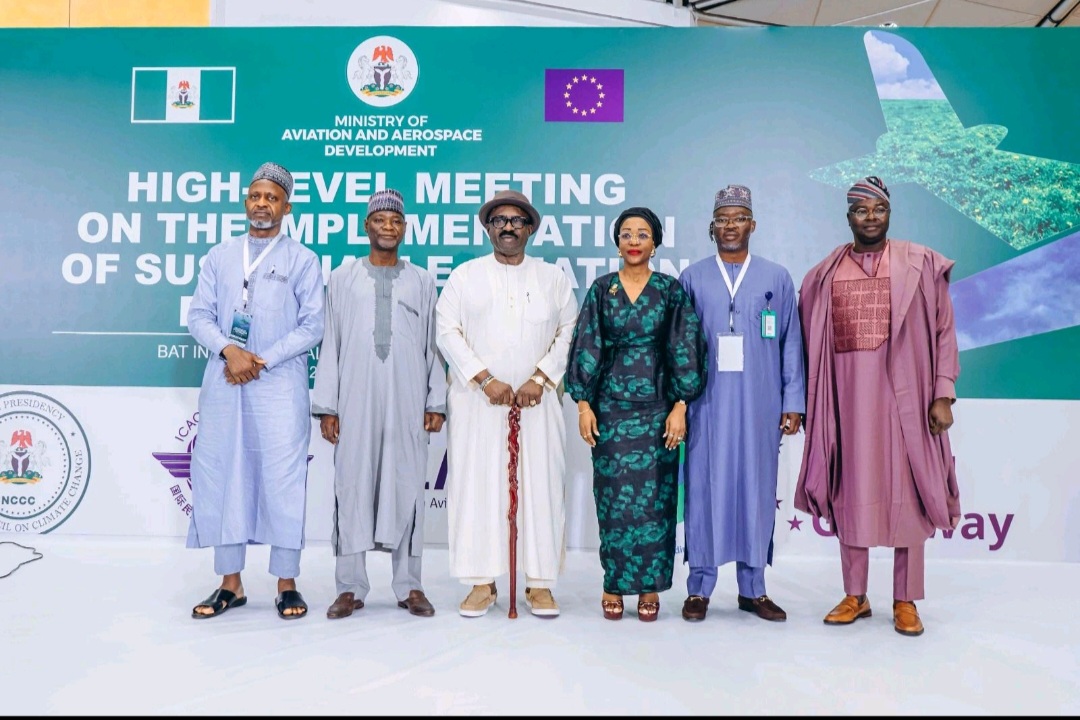
The ambition was highlighted at a High-Level Meeting on the Implementation of Sustainable Aviation Fuel in Nigeria, which brought together government officials, aviation regulators, development partners and industry leaders to advance the country’s sustainable aviation agenda.
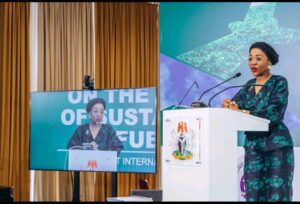
The meeting was attended by the Director-General of the National Council on Climate Change (NCCC), Dr Tenioye Majekodunmi, the Minister of Aviation and Aerospace Development, the Director-General of the Nigeria Civil Aviation Authority (NCAA), H.E. Gautier Mignot, Ambassador of the Delegation of the European Union to Nigeria and ECOWAS, as well as representatives of the International Civil Aviation Organization (ICAO), the European Union Aviation Safety Agency (EASA), government institutions and industry stakeholders.
Dr Majekodunmi said SAF was rapidly emerging as a critical component of efforts to decarbonise the global aviation industry, presenting Nigeria with a strategic opportunity to attract green investment, enhance energy security, diversify its economy and create quality jobs.
He said the development of a robust SAF industry would align with the government’s Renewed Hope Agenda while positioning Nigeria to play a leading role in Africa’s transition towards cleaner aviation.

“Our ambition should not simply be to consume Sustainable Aviation Fuel. Our ambition should be to produce it, certify it, finance it and ultimately export it,” Dr Majekodunmi said.
The NCCC, as Nigeria’s apex climate institution and Designated National Authority for carbon markets, is also working to strengthen the governance and integrity frameworks required to support the Carbon Offsetting and Reduction Scheme for International Aviation (CORSIA).
According to the Council, credible governance and high-integrity carbon markets will be critical to mobilising climate finance, strengthening investor confidence and supporting Nigeria’s participation in global efforts to reduce aviation emissions.
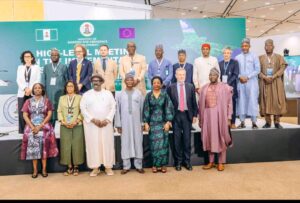
The high-level engagement is expected to contribute to the development of a credible, investable and internationally recognised SAF ecosystem in Nigeria.
With the right policy frameworks, investment and technical capacity, stakeholders believe Nigeria can leverage its resources and strategic position to develop a competitive SAF value chain — from production and certification to financing and export — while contributing to a cleaner, more resilient and prosperous aviation future.
Source: www.climatewatchonline.com