
Report By: Ishmael Barfi
Eighteen youth-led energy businesses have developed investment proposals covering 16 technology areas under Ghana’s Renewable Energy Master Plan (REMP) for 2026–2030, demonstrating their readiness to participate in the country’s renewable energy expansion.
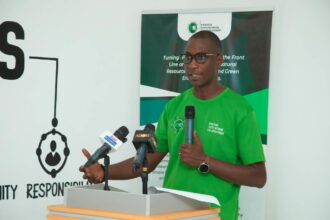
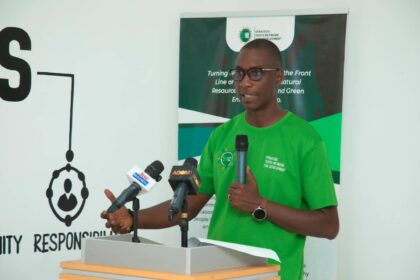
The proposals were disclosed by the Strategic Youth Network for Development (SYND) in a statement delivered at a press conference at its office in Accra and read by the organisation’s Executive Coordinator, Chibeze Ezekiel.
The organisation said the business plans identify opportunities for young entrepreneurs within the government’s renewable energy targets, which require an estimated US$10.8 billion in investment and are expected to generate more than 353,000 jobs over five years.
The proposals cover 16 of the plan’s 26 technology areas, including solar home systems, solar street lighting, solar crop dryers, irrigation, water pumping, mini-grids, biogas, electric vehicle charging and battery storage.
Among the proposals, three businesses are targeting the development of 24 solar crop dryers out of the government’s target of 100.
Two other businesses have proposed establishing 15 agricultural and industrial biogas plants, positioning themselves to contribute to the expansion of renewable energy applications in agriculture and industry.
SYND stressed that the proposals are business plans rather than completed projects. However, it said they demonstrate that young enterprises understand the government’s targets, can identify opportunities within the plan and are prepared to contribute to its implementation.
The initiative builds on the organisation’s Young Green Entrepreneurs Programme, launched in 2022 with approximately 40 start-ups in its first cohort. More than 110 entrepreneurs have since participated across three cohorts.
The programme’s work now continues through SYND’s Young Green and Sustainability Entrepreneurs Consortium, which brings together entrepreneurs, government agencies, financiers and development partners.
Despite the opportunities presented by the new plan, the organisation identified access to finance, technical capacity and institutional barriers as major challenges confronting young businesses.
Research by Shared Value Ghana, commissioned by SYND, identified three structural constraints: financing that does not match businesses’ stages of growth, gaps in technical and business skills, and fragmented policies and institutions.
The organisation cited the experience of FF Electricals and Engineering, a youth-led solar engineering firm in the Western Region, as an example of both the potential of local enterprises and the difficulties they face.
The company converted a diesel-powered threshing machine by replacing its engine with a 20-horsepower electric motor powered by a 34-kilowatt off-grid solar system.
The firm has reportedly served 200 customers across 20 districts in Ghana
However, when bidding for a solar installation contract involving a 2–3-kilowatt system, the company was required to pre-finance the first phase, with payment expected no sooner than 40 days after completion.
It was also required to provide insurance cover of at least US$1 million and submit Energy Commission and tax clearance documents.
SYND said the requirements placed the company at a disadvantage, highlighting how procurement conditions designed around larger contractors can prevent smaller businesses from competing for public projects.
The organisation argued that young entrepreneurs need financing arrangements, technical support and fair procurement opportunities to translate their business plans into operational projects.
It therefore called for the Renewable Energy Fund to be operationalised with a dedicated window for youth-led businesses, alongside smaller procurement packages and simplified registration, certification and licensing procedures.
SYND also proposed that at least 10 per cent of relevant renewable energy contracts or installation and maintenance subcontracts be reserved for qualified local firms.
Beyond the policy recommendations, the organisation pledged to present the business proposals developed by the 18 entrepreneurs to the Ministry of Energy and Green Transition and the Energy Commission, with plans to update them annually.
It also committed to working with the Public Procurement Authority, Ghana Enterprises Agency, Environmental Protection Authority and Ghana Standards Authority to help its members navigate registration, certification and procurement requirements.
Other commitments include organising youth green trade fairs to connect entrepreneurs with buyers and financial institutions, as well as tracking and publishing participating businesses’ performance in job creation, customers served and renewable energy capacity installed, with their consent.
SYND said supporting youth-led renewable energy businesses should be regarded as an investment in employment creation, local enterprise development and Ghana’s energy transition.
It maintained that the success of the REMP would depend partly on whether young Ghanaian businesses could move beyond developing proposals to securing contracts, attracting investment and delivering renewable energy solutions.
Source: www.climatewatchonline.com