
New York, Sept. 23, 2026 — Climate impacts already being experienced by communities are putting adaptation, climate finance and a just energy transition at the centre of discussions as world leaders gather in New York for the 81st United Nations General Assembly.
The UN General Assembly’s high-level week runs from September 18 to 28, with the General Debate taking place from September 22 to 28. A high-level event on climate action and the just transition was held on September 23, convened by UN Secretary-General António Guterres.
Against this backdrop, the RLRI Africa Program is tracking discussions around climate action, climate overshoot and the just transition, with particular attention to what global decisions could mean for communities already facing the consequences of a changing climate.
Three issues have emerged prominently: responding to climate overshoot, ensuring that the clean-energy transition is genuinely just, and scaling up finance for climate resilience.
Climate overshoot puts adaptation in focus
The UN’s 2026 Climate Summit described the world as entering a phase of growing climate impacts and uncertainty, with leaders discussing the need to strengthen communities’ resilience while accelerating climate action.
For the RLRI Africa Program, the prospect of temporary or prolonged temperature overshoot means climate action must extend beyond efforts to reduce emissions.
It requires stronger adaptation measures, effective responses to loss and damage, and sustained investment in resilient infrastructure and communities.
The emphasis reflects growing recognition that communities cannot wait for mitigation efforts alone to shield them from impacts already being experienced.
Making the energy transition just
The second priority is ensuring that the transition to clean energy does not create new inequalities.
The UN’s high-level climate event focused in part on accelerating an orderly transition to renewable energy while strengthening energy security and advancing climate justice.
For developing economies, particularly those with limited fiscal space, the transition carries significant financing and development challenges.
The RLRI Africa Program said workers, communities and developing economies facing disproportionate costs must remain part of the conversation.
A just transition, it argued, should expand economic opportunity and energy access rather than deepen existing inequalities.
Finance remains critical to frontline resilience
Access to adequate and predictable finance remains another major concern for developing countries seeking to strengthen climate resilience.
Under the climate-finance goal agreed at COP29, developed countries are to provide at least $300 billion annually to developing countries by 2035, while countries are to work towards mobilising $1.3 trillion annually in climate finance for developing countries by 2035 from public and private sources.
UN Secretary-General António Guterres has repeatedly called for these commitments to translate into affordable, predictable and accessible finance, including greater support for adaptation and resilience in developing countries.
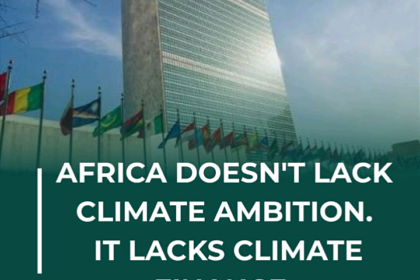
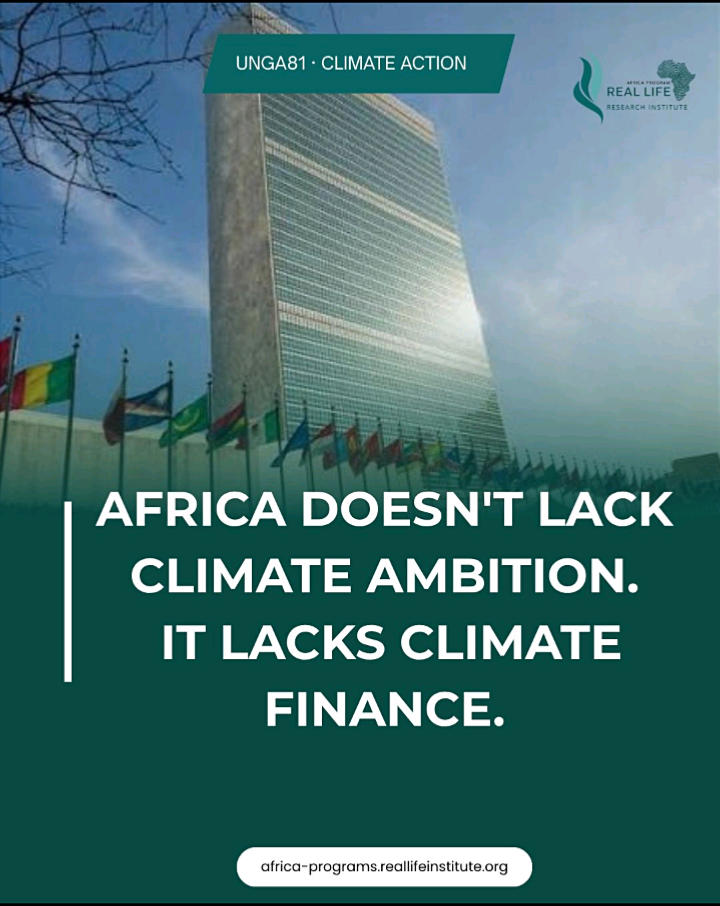
For many African countries, the challenge is therefore not necessarily a lack of climate ambition but the ability to access financing at the scale and terms required to turn climate plans into resilient infrastructure, stronger communities and sustainable development.
Africa’s frontline communities
The discussions are particularly significant for Africa, where climate impacts intersect with development challenges, infrastructure gaps and limited fiscal space.
The RLRI Africa Program said the question of climate overshoot should therefore be viewed not only as a technical issue but also through the lenses of equity, financing, governance and international cooperation.
As governments and other stakeholders shape the next phase of global climate action, the experiences and priorities of communities across Africa and the wider Global South remain central to determining whether the transition delivers resilience and opportunity.
The ongoing discussions at the UN high-level week provide an important platform for examining whether global climate commitments can translate into practical support for communities already living with climate impacts.
Source: www.climatewatchonline.com