

Accra, Ghana — Ghana has marked a major milestone in its environmental management journey with the launch of a landmark publication documenting a decade of progress in electronic waste (e-waste) management.
The publication, titled “A Decade of Pioneering E-Waste Management in Ghana (2009–2019),” was launched by Green Advocacy Ghana in partnership with the E-Waste Management Fund, Pure Earth, and GIZ Ghana at the Mikaddo Conference Centre in Accra.
The publication chronicles how Ghana transformed e-waste from a largely unregulated challenge into a structured and nationally coordinated sector through research, policy reforms, and stakeholder collaboration.
The journey began in 2009 when GreenAd, working with the then Ministry of Environment, Science and Technology and the Environmental Protection Agency (EPA), developed Ghana’s first national proposal on electronic waste importation and management.

At the time, public awareness of e-waste was limited, technical expertise was scarce, and there was no legal framework governing the sector.
Over the next decade, eight major studies were undertaken to provide evidence for policymaking and intervention design.
Among the most significant findings were pollution assessments at the Agbogbloshie scrapyard, which identified the site as one of the world’s most polluted locations due to hazardous recycling practices.
Health studies also revealed elevated levels of toxic substances, including lead, chromium, cobalt, and selenium among workers engaged in informal recycling activities.

Research further showed that Ghana’s e-waste sector employed an estimated 33,600 people and generated annual economic activity valued between US$105 million and US$268 million, despite operating largely outside the formal economy.
A major achievement highlighted in the publication was the passage of the Hazardous and Electronic Waste Control and Management Act, 2016 (Act 917), which established the country’s first comprehensive legal framework for managing electronic waste.
The legislation also provided the foundation for the creation of the National E-Waste Management Fund and introduced an eco-levy on imported electronic equipment.
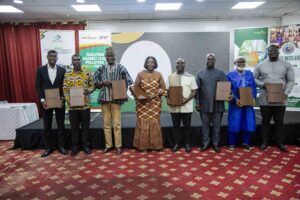
Speaking at the launch, stakeholders described the publication as both a historical record and a blueprint for future action as Ghana seeks to strengthen environmental protection and build a circular economy around electronic waste.
The event also recognised the contributions of government agencies, researchers, development partners, civil society organisations, and informal sector workers who played critical roles in shaping Ghana’s e-waste management system.
Source: www.thenewindependentonline.com