
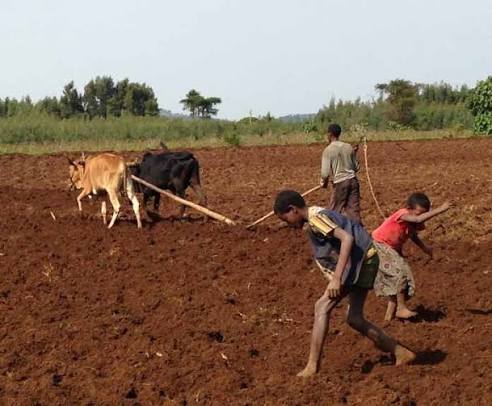
KUMASI, Ghana— When a parent leaves home for the farm, the expectation is simple: to return safely and earn enough to support the family.
But when an accident or workplace injury prevents that parent from working, the consequences can extend beyond lost income. For vulnerable households already struggling with the effects of climate change, the loss of a primary income earner can deepen financial hardship and increase the risk that a child will be forced to step in.
In farming communities, erratic rainfall, prolonged dry spells, flooding and rising temperatures are putting additional pressure on livelihoods, affecting agricultural productivity and household incomes. When such climate-related shocks are combined with workplace injuries, illness or other emergencies, families with little or no social protection may have fewer options to cope.
In some cases, the responsibility of keeping the family afloat may fall on a child, forcing them to leave school or combine education with work.
Meanwhile, the ILO says that when families lack adequate social protection and adults work in unsafe conditions, children may be forced to take on work to support their households, increasing their risk of child labour.
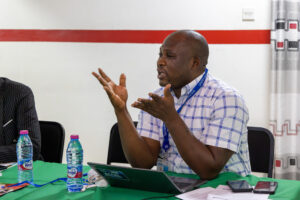
Robert Pwazaga, National Project Officer for the ILO’s ACCEL Africa Project, stressed that that families without adequate social protection are particularly vulnerable when adult household members are injured or unable to work.
“When people are not protected enough, especially the elders, the parents, when they go to the farm and they get hurt, usually they rely on the children to continue the work on the farm the next day,” he added.
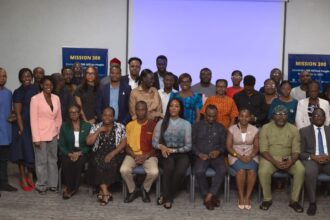
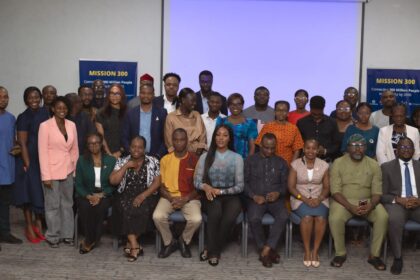
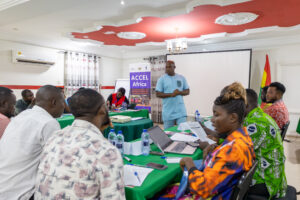
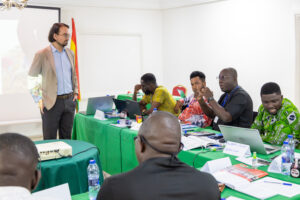
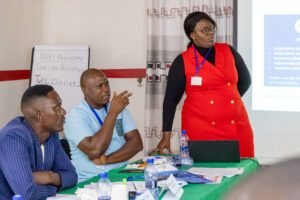
Mr Pwazaga made the remarks in an interview with Climate Watch on the sidelines of a three-day training workshop on Child Labour, Business and Human Rights for journalists in Kumasi.
The situation presents a difficult reality for children in vulnerable farming communities, where a parent’s injury can force a child to choose between attending school and helping the family survive.
The pressure may be even greater for households whose livelihoods are already being affected by climate-related challenges. When poor rainfall, prolonged dry spells, flooding or other extreme weather events reduce farm yields and incomes, families may struggle to recover from additional shocks such as injury or illness.
For some children, what begins as temporary assistance can gradually become a regular responsibility, affecting their education and potentially exposing them to hazardous or inappropriate work.
Mr Pwazaga explained that the ILO’s ACCEL Africa Project is therefore focusing on social protection as part of efforts to address the root causes of child labour in cocoa and artisanal gold mining supply chains.
The project is supporting efforts to improve access to social protection services, including the National Health Insurance Scheme, to help families cope with illness, injury and other economic shocks.
Such protection could become increasingly important as climate change places additional pressure on agriculture-dependent households. Strengthening families’ ability to withstand both climate and economic shocks can reduce the likelihood that children will be called upon to fill gaps created by lost income.
The goal is to ensure that when a parent is unable to work, the family does not have to depend on a child to fill the gap.
The project is also addressing occupational safety and health, seeking to reduce workplace risks that could leave families without their main income earners.
According to Mr Pwazaga, the project has conducted a training-of-trainers programme using the WIND methodology, which promotes improvements in workplace safety and health through a cooperative approach.
The intervention is particularly important in communities where families depend heavily on agriculture and artisanal mining for their livelihoods—sectors that can be highly vulnerable to environmental and economic pressures.
The ACCEL Africa Project is also working with cocoa cooperatives, which Mr Pwazaga believes can play an important role in driving change within farming communities.
“We think that through the cooperatives, they will be able to drive the needed change at the community level, and to ensure that children are not involved in our cocoa farms,” he said.
Cooperatives and other community structures could also play a role in helping farming communities respond to climate-related challenges by promoting safer working conditions, supporting resilient livelihoods and connecting vulnerable households to social protection services.
The project is collaborating with district assemblies, community-based organisations and other stakeholders to strengthen local structures that can protect children and support vulnerable families.
For Mr Pwazaga, the long-term goal is to ensure that systems established through the project remain functional beyond its lifespan.
“Upon the closure of the project, upon the transition of the project, the necessary structures would have been put in place for the project gains to be sustained in many, many years ahead,” he said.
For a child whose parent has been injured, effective social protection could mean the difference between staying in school and stepping into the workplace.
But as climate change adds new pressures to already vulnerable farming households, the challenge is becoming more complex. A poor harvest, an extreme weather event or a workplace injury can each threaten a family’s income. When these shocks occur together, the risk to children can become even greater.
Behind the fight against child labour, therefore, lies a simple but urgent question: When a parent can no longer work, and a family’s livelihood is threatened by climate and economic shocks, who protects the child from having to take their place?
Source: www.climatewatchonline.com