
Report By: Ishmael Barfi
The Strategic Youth Network for Development (SYND) has called on government to reform public procurement, improve access to financing and simplify regulatory requirements to enable youth-led businesses to participate in Ghana’s Renewable Energy Master Plan (REMP) for 2026–2030.
The organisation said the success of the estimated US$10.8 billion investment programme should be measured not only by the renewable energy infrastructure delivered but also by the extent to which local businesses, particularly those owned by young people, benefit from the opportunities it creates.
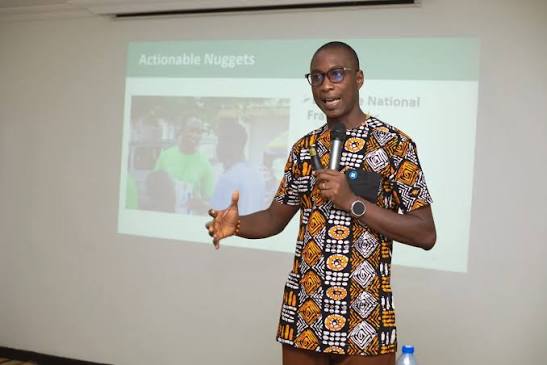
The call was contained in a statement delivered at a press conference at SYND’s office in Accra and read by the organisation’s Executive Coordinator, Chibeze Ezekiel.
The REMP is expected to generate more than 353,000 jobs, with targets including 440 mini-grids, 1.1 million solar lighting systems, 125,000 solar street and community lights, 10,000 hectares of solar irrigation, 100 solar-powered crop dryers and 4.5 million improved cookstoves.
SYND argued that the scale of the investment presents an important opportunity to address youth unemployment, which stands at 21.9 per cent, compared with the national rate of 12.8 per cent.
It cited Ghana Statistical Service data indicating that people aged 15 to 35 constitute 36.9 per cent of the country’s population, stressing that young people must be recognised as entrepreneurs, contractors and implementation partners in the energy transition.
Reflecting on the previous Renewable Energy Master Plan covering 2019–2025, the organisation identified institutional and implementation failures that it said must be addressed to prevent a repetition under the new programme.
It noted that the Renewable Energy Fund, although established, was never operationalised, partly because the Renewable Energy Authority was not set up. The coordinating unit envisaged under the previous plan was also not established.
SYND further said the requirement under Legislative Instrument 2354 for at least 60 per cent local procurement of goods and services had not been met.
The organisation pointed to mixed implementation results under the previous plan. Distributed solar reached 86 megawatts against a 100-megawatt target, while improved domestic cookstoves exceeded their target, recording more than 5.3 million against 1.8 million.
According to SYND, the performance of these areas demonstrates the importance of local supply chains and domestic businesses in delivering renewable energy projects.
To address the challenges, the organisation outlined six recommendations to government.
First, it called for the operationalisation of the Renewable Energy Fund in the 2027 national budget, with a dedicated financing window for youth-led and small renewable energy businesses.
The proposed facility should provide pre-investment grants, partial credit guarantees and working capital for supply contracts, with support from institutions such as the Ghana Enterprises Agency and MASLOC.
Second, SYND urged government to break large renewable energy targets into smaller procurement packages that local businesses can compete for. It proposed reserving at least 10 per cent of relevant contracts or installation and maintenance subcontracts for qualified local firms.
It also recommended proportionate pre-qualification and documentation requirements, mobilisation advances and payment within 30 days of completed project phases to prevent smaller businesses from having to finance government projects from their limited resources.
Third, the organisation called for a dedicated clean-cooking programme to support young entrepreneurs in producing, distributing and servicing improved cookstoves, including assistance with product testing, certification and financing.
Fourth, it proposed establishing a one-stop renewable energy facilitation desk in 2027 to simplify business registration, certification and licensing. It also called for greater awareness of existing tax incentives and a review of certification fees and regulatory costs for smaller businesses.
Fifth, SYND urged government to establish the REMP coordinating unit with representation for young entrepreneurs and publish annual progress reports tracking the participation of young people, women and persons with disabilities in renewable energy jobs and contracts.
Finally, it called for an evaluation of the National Green Jobs Strategy covering 2021–2025 and the development of a successor strategy aligned with the new renewable energy plan.
According to the organisation, the new strategy should recognise youth-led enterprises as implementation partners in Ghana’s energy transition.
SYND maintained that addressing these challenges would require stronger collaboration among government institutions, financial institutions, the private sector and development partners.
It said ensuring that young entrepreneurs and local businesses have fair access to renewable energy contracts would help strengthen domestic supply chains, create employment and retain more of the economic benefits of Ghana’s energy transition within the country.
Source: www.climatewatchonline.com