
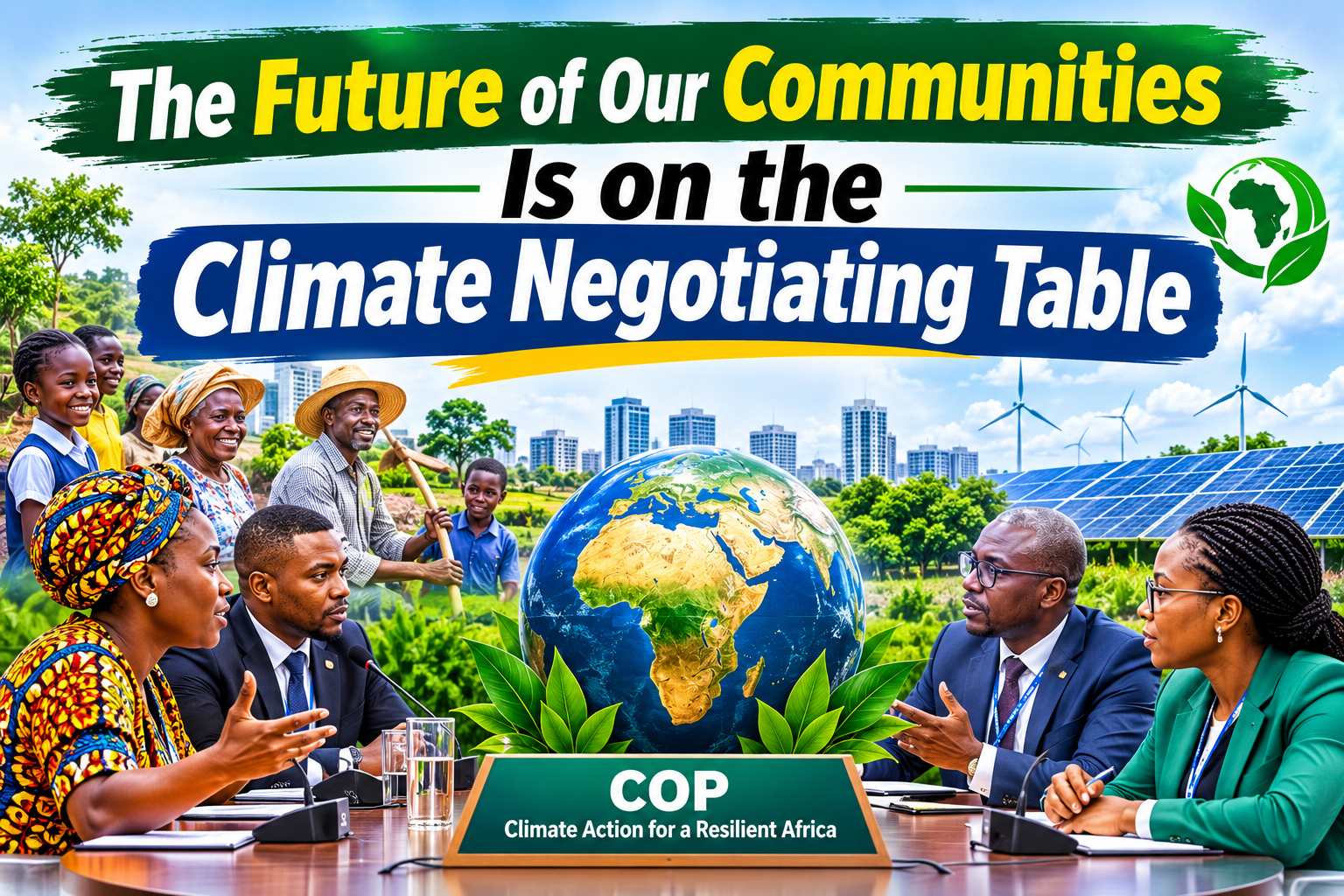
COP31 must turn climate promises into meaningful action for the people and communities on the frontlines of the climate crisis.
Imagine a woman in a rural Ghanaian community whose livelihood depends on farming. Unpredictable rainfall threatens her harvest, rising temperatures affect her productivity, and the cost of household energy continues to put pressure on her already limited income.
In the same community, a young person with an idea for a solar-powered business struggles to access the financing, technical skills and opportunities needed to turn that idea into a viable enterprise.
Their experiences may seem far removed from the negotiating rooms of international climate conferences. Yet, the decisions made in those rooms will directly influence their livelihoods, opportunities and future.
This is the reality of climate change: while its impacts are experienced locally, many of the decisions, financial commitments and policy frameworks shaping climate action are negotiated globally.
As world leaders, policymakers and climate stakeholders are negotiating at the 31st Conference of the Parties to the United Nations Framework Convention on Climate Change (COP31), the question must go beyond what countries are promising to do. We must ask whether these commitments are reaching the communities that need them most, and whether the people experiencing the impacts of climate change have a voice in shaping the solutions.
From Addis Ababa to Antalya
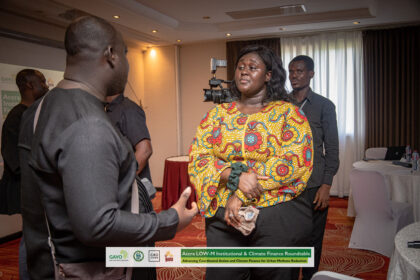
At this year’s Africa Regional Forum on Sustainable Development (ARFSD), Women Environmental Programme (WEP) Ghana contributed to regional discussions on inclusive and sustainable development. Our advocacy priorities were reflected in the Addis Ababa Declaration, which recognises women and young people as co-creators, leaders and drivers of sustainable development.
The Declaration also calls for:
Targeted investments in women- and youth-led enterprises
Improved access to finance and technology
Meaningful participation in decision-making
Skills development for the green economy
Building on these commitments, WEP Ghana is making five key demands at COP31. We call on world leaders, governments, climate finance institutions and development partners to move beyond promises and deliver climate action that transforms lives, protects ecosystems and leaves no community behind.
1. Make Climate Finance Work for Communities
Behind every climate finance commitment are communities waiting for solutions.
A woman seeking to establish a clean energy business needs more than encouragement. She needs affordable capital, appropriate technology and access to markets. A young entrepreneur developing an agricultural waste recycling initiative needs financing and technical support to turn an innovative idea into a sustainable livelihood.
Yet, grassroots organisations, women-led enterprises and youth initiatives often face significant barriers to accessing climate finance. Funding mechanisms can be difficult to navigate, application requirements can be restrictive, and local communities are frequently excluded from decisions about projects designed to benefit them.
Climate finance must work for the people it is intended to serve.
Multilateral development banks, including the World Bank and African Development Bank, must also ensure that women and young people are involved throughout the entire project cycle. From identifying community needs and designing interventions to implementation, monitoring and evaluation, their voices and lived experiences must shape development investments.
Our demand: We call on world leaders and climate finance institutions to strengthen direct access to climate finance, simplify funding processes and prioritise grants and accessible financing for locally led initiatives.
2. Put Women at the Centre of Climate Adaptation
When a community experiences prolonged drought, flooding or changing rainfall patterns, the impacts do not affect everyone in the same way.
For women whose livelihoods depend on agriculture, natural resources and informal economic activities, climate shocks can mean lost income, food insecurity and increased unpaid care responsibilities. Yet, these same women possess valuable knowledge of local ecosystems, food systems, natural resource management and community resilience.
Too often, adaptation policies are developed without adequately recognising this knowledge or involving women in decisions about the solutions.
Climate adaptation cannot be effective if the people most affected are excluded from shaping it.
We call for gender-responsive and locally led adaptation that recognises the different vulnerabilities, capacities and priorities of women, men and young people. National adaptation plans and local climate strategies must be informed by community experiences, supported by adequate financing, and designed to strengthen local resilience.
Our demand: Invest in gender-responsive, locally led adaptation. Ensure women and young people have decision-making power, access to adaptation finance and the resources to lead climate resilience initiatives in their communities.
3. Scale Renewable Energy for a Just Transition
What does the energy transition mean to a woman who still depends on polluting cooking fuels? What opportunities does it create for a young person who wants to build a business around renewable energy but lacks the necessary skills and capital?
A just transition must answer these questions.
Moving away from fossil fuel dependence is essential to addressing the climate crisis, but the transition must also create economic opportunities, improve energy access and address existing inequalities.
Across communities, renewable energy solutions offer opportunities to improve livelihoods while reducing environmental degradation, including:
Solar lamps
Solar dryers
Clean cookstoves
Sustainably produced biomass briquettes
These solutions can do more than provide cleaner energy. They can support women-led enterprises, create employment for young people, reduce pressure on natural resources and strengthen local economies.
By investing in technical training, green entrepreneurship and community-based renewable energy initiatives, we can position women and young people as active contributors to the energy transition, rather than simply consumers of new technologies.
Our demand: Accelerate the transition to renewable energy while investing in the people who can drive it. Scale up decentralised clean energy solutions, support women- and youth-led green enterprises and provide the financing, technology, skills and market opportunities needed to build sustainable livelihoods.
4. Deliver the Belém Gender Action Plan
Climate negotiations have increasingly recognised the importance of gender equality. But recognition alone does not transform the realities of women and girls.
The Belém Gender Action Plan provides an important framework for advancing gender equality and strengthening the integration of gender considerations across climate action. Its significance, however, will be measured not simply by what governments agree to, but by what they implement.
Will gender considerations inform national climate policies?
Will women’s organisations receive the resources to participate meaningfully?
Will women and girls have equal opportunities to access climate finance, technology and leadership positions?
Will governments be held accountable for delivering on their commitments?
These are the questions that must guide implementation.
We call for the effective implementation of the Belém Gender Action Plan, with clear institutional responsibilities, adequate resources and accountability mechanisms. Women’s movements, grassroots organisations, young women and civil society must have meaningful opportunities to contribute to implementation and monitor progress.
Gender equality must not remain a paragraph in a climate agreement. It must become visible in the policies, budgets and programmes that shape people’s lives.
Our demand: Translate global gender commitments into adequately financed national and local action, strengthen accountability and ensure women and girls are meaningfully involved in climate decision-making.
5. Keep 1.5°C Within Reach
For communities already experiencing the consequences of climate change, every fraction of a degree matters.
Rising temperatures, changing rainfall patterns, prolonged droughts, flooding and ecosystem degradation are placing increasing pressure on food systems, water resources and livelihoods. For vulnerable communities, these are not distant projections; they are challenges that affect their ability to sustain themselves and plan for the future.
The 1.5°C temperature goal represents a critical threshold for limiting the most severe consequences of climate change. Keeping this goal within reach requires urgent and sustained action from governments and global leaders.
Climate ambition must be matched by implementation. Countries must strengthen their emissions reduction commitments, accelerate the transition away from fossil fuels, scale renewable energy and ensure that climate action is consistent with the 1.5°C limit.
At the same time, this transition must recognise the different responsibilities and capacities of countries and ensure that vulnerable communities and workers are supported throughout the process.
Our demand: Keep 1.5°C within reach. Deliver ambitious emissions reductions, accelerate the transition away from fossil fuel dependence and ensure that global climate commitments translate into meaningful action to protect people and ecosystems.
The Future We Want Must Include Everyone
A woman establishing a clean energy enterprise, a young person developing a sustainable business, a community protecting its natural resources and local leaders shaping adaptation priorities may appear to be separate stories. In reality, they are connected by one common need: climate action that puts people at the centre.
The decisions made at COP31 must recognise this connection.
Climate finance must reach communities.
Renewable energy must create opportunities.
Adaptation must respond to the realities of women and vulnerable populations.
Gender commitments must be implemented.
Global ambition must keep the 1.5°C goal within reach.
These are not simply demands for better climate policies. They are calls for a transition that creates sustainable livelihoods, addresses inequalities and recognises the leadership of the people whose futures are most affected by climate change.
WEP Ghana calls on world leaders to move beyond commitments and deliver action that is inclusive, adequately financed and grounded in local realities.
Because the success of global climate action should not only be measured by the agreements reached at international conferences, but by the difference those agreements make in the lives of people and communities.
Source: www.wepghana.org