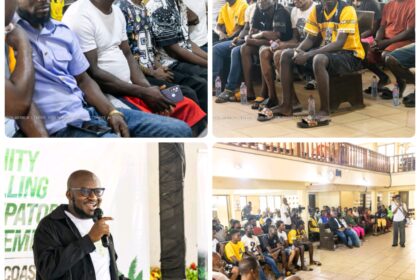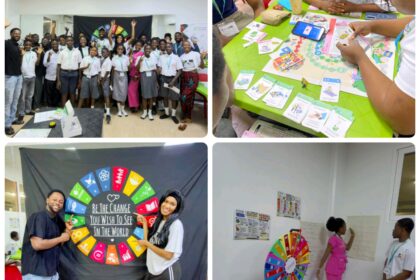

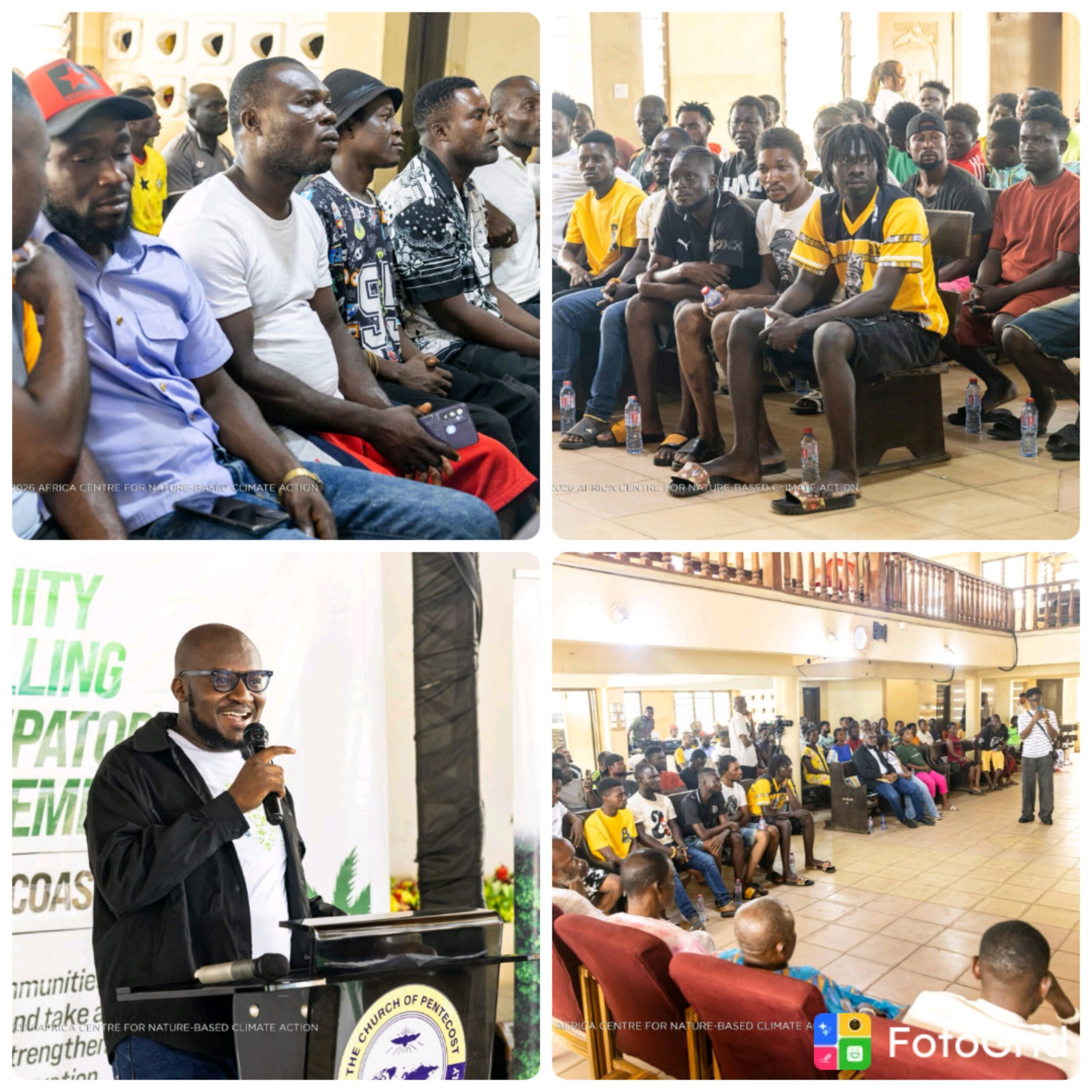
The Africa Centre for Nature-Based Climate Action (AC4NCA) has brought together residents, community leaders and key stakeholders in Chorkor for a town hall and capacity-building engagement focused on addressing marine pollution and its impact on coastal livelihoods.
The event, held in Chorkor on Wednesday, 9th September 2026, formed part of AC4NCA’s Community Storytelling and Participatory Engagement for Reducing Marine Pollution in Coastal Communities in Ghana project, supported by the Pulitzer Center and PADI Foundation.
The engagement followed an earlier stakeholder meeting with the Ablekuma South Sub-Metro and community opinion leaders, and provided a platform for participants to discuss the causes and effects of marine pollution while exploring practical community-led solutions.
The programme brought together representatives of the Ablekuma South Sub-Metro, community opinion leaders, partners and residents, with discussions centred on waste management, marine conservation, community responsibility and the need to protect the coastal environment.
Speaking at the event, Acting Executive Secretary of AC4NCA, Juliet Osei-Wusu, said the project is intended to move the conversation on marine pollution from awareness to collective action.
“We want communities to see themselves not just as victims of marine pollution, but as key actors in protecting the coastal environment. This engagement is an opportunity to build that sense of responsibility and collective action,” she said.
Chairman of the Ablekuma South Sub-Metro, Theophilus Kpakpo Allotey, reaffirmed the importance of collective action in addressing environmental challenges confronting coastal communities.
“The responsibility for keeping our coastline clean cannot rest with one institution. It requires the commitment of the community, local authorities and our partners,” he said.
The engagement also featured contributions from Oswald Okaitei, CEO of PlayHouse.kom, a partner on the project, who highlighted the connection between a clean coastline, community wellbeing and local economic opportunities.
“A clean coast is not only about the environment. It is also about tourism, livelihoods and the future of the community,” Mr. Okaitei said.
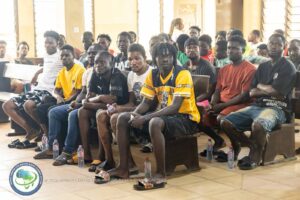
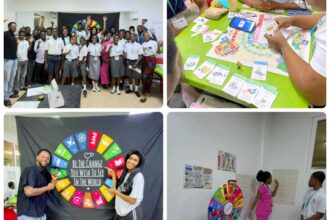
The capacity-building component sought to equip participants with knowledge and practical perspectives on marine pollution, while the storytelling approach encouraged community members to share their experiences and perspectives on the changing coastal environment.
AC4NCA Project Manager Emmanuel Ameyaw said meaningful progress in tackling marine pollution requires communities to be active participants rather than passive beneficiaries.
“This project is about putting communities at the centre of the conversation. We want to hear their experiences, strengthen their capacity and support them to become part of the solution,” Mr. Ameyaw said.
Chorkor, like many coastal communities in Accra, continues to face challenges associated with plastic waste and other forms of pollution. The accumulation of waste along the coastline poses risks to marine ecosystems, public health and livelihoods that depend on the coastal environment.
The town hall therefore served not only as an awareness-raising platform but also as a space for dialogue between community members, local authorities and project partners.
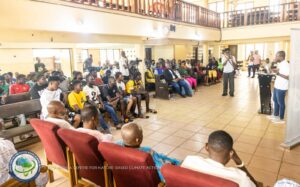
The project will culminate in a community beach clean-up exercise, providing participants with an opportunity to translate the knowledge and commitments generated through the engagement into practical action along the Chorkor coastline.
Through the initiative, AC4NCA and its partners hope to strengthen community ownership of marine conservation efforts and promote sustained behavioural change towards cleaner and more resilient coastal communities in Ghana.
Source: www.climatewatchonline.com