


Report By: Ishmael Barfi
Accra,— Ghana is stepping up efforts to prevent lead poisoning through the development of cookware standards, nationwide exposure assessments and research into used lead-acid battery recycling, the Africa Director of Pure Earth, Rev. Dr. Esmond Wisdom Quansah, has said.
Speaking during Poisoning Prevention Awareness Week, he emphasized the importance of public education, scientific research and stronger regulatory enforcement in identifying and addressing sources of lead exposure.
He described this year’s theme, “From Detection to Prevention,” as critical to protecting public health, noting that lead poisoning is preventable but low public awareness and inadequate education continue to leave communities vulnerable to its hidden dangers.
“Lead poisoning is preventable, but with low awareness and lack of education, it becomes difficult for communities to look out for the hidden dangers,” he said.

Rev. Dr. Quansah said Ghana was making progress through partnerships with international organisations and local institutions, although more work was needed to eliminate exposure risks.
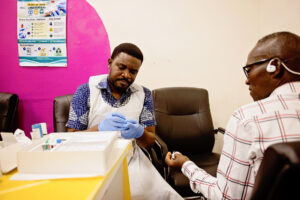
He explained that development partners were supporting extensive assessments to identify sources of lead exposure across the country, while Vital Strategies was conducting blood lead level surveillance to establish a baseline for future interventions.
According to him, the data would guide the design of mitigation measures, environmental remediation, public awareness campaigns and stronger regulatory frameworks.
Ghana develops cookware standards
Rev. Dr. Quansah identified the development of cookware standards in collaboration with the Ghana Standards Authority as a significant milestone in the country’s efforts to prevent lead poisoning.
He said Pure Earth Initiative was providing additional funding through its country office to support artisan training and strengthen certification processes nationwide.
He described Ghana as the first country in sub-Saharan Africa to undertake the initiative, adding that effective enforcement and compliance could help reduce exposure to lead from potentially hazardous cookware.
He noted that similar types of cookware were used across several African countries, suggesting that Ghana’s experience could provide lessons for other countries seeking to address the problem.
Study targets used lead-acid battery recycling
The Africa Director also disclosed that an extensive mass-balance study was underway to examine the used lead-acid battery (ULAB) value chain, covering importation, usage, handling, transportation and recycling.

He said the study would establish a baseline for understanding exposure pathways and identifying interventions to address the risks associated with lead recycling.
Citing a recent study by the Center for Global Development, he said an estimated 40 to 45 per cent of lead exposure sources were linked to used lead-acid batteries and their recycling.
He stressed that a comprehensive understanding of the value chain was essential to identifying the points at which exposure occurred and developing effective preventive measures.
Rev. Dr. Quansah further disclosed that Global Incubators had received funding to conduct a supply-chain analysis across West Africa.
The analysis is expected to provide insights into cross-border activities and inform coordinated interventions to address lead exposure across the region.

He emphasised that sustained collaboration among government agencies, development partners, researchers and local communities would be necessary to translate research findings into practical action.
Rev. Dr. Quansah said continued public education, stronger regulatory enforcement and evidence-based interventions remained crucial to reducing lead exposure and protecting public health in Ghana and across Africa.
Source: www.climatewatchonline.com