
Climate change is increasingly threatening lives, livelihoods and communities across Ghana. From devastating floods to extreme heat and other environmental hazards, the need for effective early-warning systems and disaster preparedness has never been greater. Yet, as the country strengthens its response to climate change, one group continues to face the risk of being overlooked: persons with disabilities.
This is an unacceptable gap in national preparedness.
A warning system is only effective when it reaches everyone. Emergency information communicated without sign language interpretation, audio messages or accessible digital formats can exclude people who depend on these channels. Similarly, inaccessible roads, transportation systems and evacuation centres can prevent persons with disabilities from reaching safety, even when warnings are received on time.
The problem is not that persons with disabilities are inherently unable to respond to emergencies. Rather, public systems are too often designed without adequately considering their needs.
Climate Watch Newspaper believes this reflects a fundamental weakness in Ghana’s approach to disaster preparedness and climate action. Protecting people must mean protecting everyone, regardless of physical or sensory ability.
The National Disaster Management Organisation (NADMO), local assemblies and relevant government agencies must make accessibility a central requirement in emergency planning. Early-warning messages should be communicated through multiple formats, including sign language, audio alerts, Braille, accessible digital platforms and local languages. Evacuation centres, emergency transportation and relief distribution systems must also accommodate people with different disabilities.
These measures must be incorporated into public planning and budgets rather than introduced as temporary responses when disasters occur.
Ghana already has a legislative framework for disability rights under the Persons with Disability Act, 2006 (Act 715). However, legislation without effective implementation offers little protection to people confronting real dangers. Government must demonstrate how its legal commitments are being translated into accessible public infrastructure, emergency services and climate-related interventions.
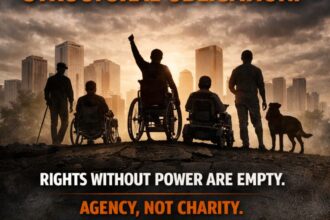
Equally important is the participation of persons with disabilities in decisions that affect them. Their experiences and recommendations should inform climate risk assessments, disaster management strategies and community adaptation programmed. The principle of Nothing About Us Without Us must guide these processes. Persons with disabilities should be recognized not merely as recipients of assistance but as active contributors to policy and development.
The media also has a responsibility to keep this issue in the public conversation. Reporting on climate-related disasters must go beyond the number of communities affected and the scale of infrastructure damage. Journalists should examine whether persons with disabilities receive timely warnings, access emergency support and participate in recovery programmes.
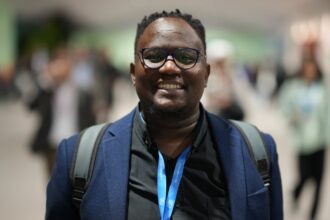
The contribution of Godsway Adzornu to this discussion is a reminder that disability and climate vulnerability deserve greater attention in Ghana’s environmental discourse. His work should encourage policymakers, development organisations and media institutions to confront the barriers that leave some citizens disproportionately exposed to environmental risks.
The time for general commitments and policy assurances is over. Ghana needs measurable action.
We call on the government to require every relevant ministry, metropolitan, municipal and district assembly, and disaster management institution to incorporate disability inclusion into its climate and emergency preparedness plans. These plans must have dedicated budget allocations, clear implementation responsibilities and measurable targets.
NADMO must work with organisations of persons with disabilities to audit existing early-warning and evacuation systems, identify accessibility gaps and publish a clear plan for addressing them. Local assemblies must ensure that evacuation centres and emergency facilities meet accessibility standards. Climate adaptation projects funded by government and development partners must demonstrate how persons with disabilities are included in their design, implementation and evaluation.
We further urge organisations of persons with disabilities to demand representation in climate policy discussions and participate actively in monitoring public commitments. Development partners must make inclusive design and accountability conditions of their support, while the private sector must ensure that its climate-related investments do not reproduce existing inequalities.
These demands should not be treated as additional burdens on national development. They are essential investments in public safety, human rights and social justice.
Ghana cannot claim to be adequately prepared for climate-related emergencies while some citizens remain unable to access warnings, evacuate safely or obtain the support they need. Nor should disability inclusion depend on the goodwill of individual institutions or the availability of temporary project funding. It must become a standard of public governance.
The next emergency may not give us time to correct these failures. Government and its partners must act before lives are put at risk, not wait until preventable suffering exposes the consequences of exclusion.
When the warning comes, everyone must have the opportunity to receive it, understand it and reach safety. A country that leaves persons with disabilities behind cannot claim to have built resilience for all.
Source: www.climatewatchonline.com