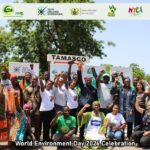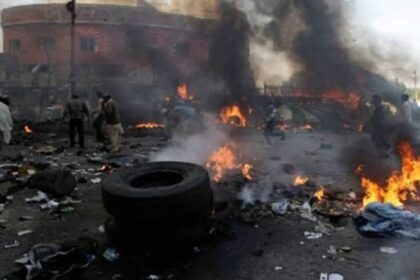


Accra, Ghana, June 5, 2026— On World Environment Day, fresh concerns are emerging over the growing environmental health burden linked to lead contamination in communities situated near Ghana’s expanding battery recycling industry.
New research from the Mountain Research Institute indicates elevated levels of lead in soil samples collected around lead-acid battery recycling and smelting facilities, raising alarms about long-term exposure risks affecting nearby households.
The findings were presented during a lead poisoning training workshop for journalists organised by Vital Strategies and Bloomberg Philanthropies, where researcher Samson Etiyemo detailed evidence of widespread contamination extending beyond industrial sites into surrounding residential areas.
He said the data shows a clear pattern of environmental exposure that places entire communities at risk.
“What we are seeing is not just industrial contamination, but community-wide exposure,” Etiyemo noted.
Ghana’s growing role as a regional hub for lead-acid battery recycling has intensified concerns among environmental health experts, particularly as the country receives used batteries from several West African countries for processing.
However, experts say regulatory oversight and environmental monitoring have not expanded at the same pace as the industry.
A key concern is the movement of lead from contaminated soil into groundwater systems. In many affected communities, residents rely heavily on boreholes for drinking water, often without any testing for heavy metals or toxic contamination.
Etiyemo warned that this creates a hidden but dangerous exposure pathway.
“Many communities depend on borehole water without first assessing its safety,” he said. “That significantly increases the risk of ingesting lead-contaminated groundwater over time.”
Environmental health organisation Pure Earth** has previously documented elevated blood lead levels among children living near recycling communities in Ghana, reinforcing concerns about long-term exposure.
Adding to the concern, Dr. Esmond Wisdom Quansah, Africa Regional Programme Director for Pure Earth, warned that lead contamination in Ghana is not confined to recycling sites alone but is present across multiple everyday exposure sources.
He noted that lead has been detected in soil, cookware, cosmetics, toys, and even some food products, making exposure widespread and difficult to avoid.
According to him, children remain the most vulnerable group due to their developing nervous systems and higher absorption rates of toxic metals.
“Lead exposure is not a single-source problem. It is a multi-pathway crisis affecting homes, markets and communities,” Dr. Quansah said.
He stressed that addressing the crisis requires prevention at the source, stronger regulation, and public education to reduce exposure across all fronts.
Health experts warn that lead exposure can cause irreversible damage, including reduced IQ, learning difficulties, developmental delays, behavioural disorders and damage to vital organs.
Researchers also highlight airborne dust as another significant exposure route. During prolonged dry seasons, dust from recycling and smelting activities can carry fine lead particles into nearby communities, where they are inhaled or deposited on surfaces, food and water.
Etiyemo emphasised that the issue must now be treated as both an environmental and public health emergency.
“On World Environment Day, we must recognise that environmental protection is fundamentally about protecting human health,” he said. “When lead enters the soil, water and air, it ultimately enters the human body.”
He called on the Environmental Protection Authority, the Ghana Geological Survey Authority, and the Hydrological Services Authority to intensify groundwater testing, strengthen monitoring systems and enforce stricter compliance standards for recycling facilities.
He also urged tighter regulation of battery recycling operations, warning that economic gains must not come at the expense of public health and environmental safety.
As the world marks World Environment Day, experts say Ghana’s experience underscores a broader global reality: environmental pollution is increasingly inseparable from public health outcomes.
For families living near recycling sites, the crisis is immediate and personal—hidden in the soil they walk on, the water they drink, and the air their children breathe.
Source: www.climatewatchonline.com