
Climate Watch | Ghana
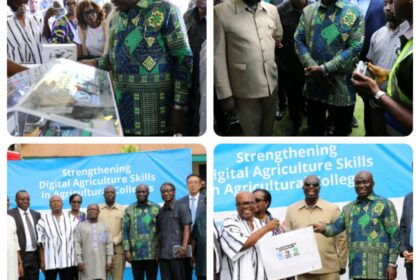
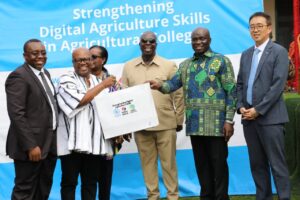
Ghana is strengthening efforts to build climate resilience in agriculture by equipping five agricultural colleges with digital technologies designed to prepare future agricultural professionals for data-driven, climate-smart farming.
The Minister of Food and Agriculture, Hon. Eric Opoku, said the investment in modern agricultural equipment would help students develop the skills needed to support farmers in responding to changing weather conditions, improving water-use efficiency and reducing production losses.
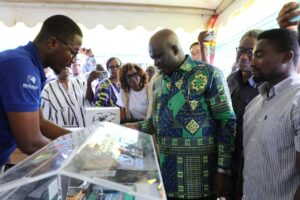
The equipment, provided through a partnership involving the Ministry of Food and Agriculture, the United Nations World Food Programme (WFP) and the Korea International Cooperation Agency (KOICA), includes weather stations, soil-moisture meters, soil testers, GPS devices, drones, Internet of Things (IoT) sensor kits and greenhouse environmental-control learning kits.
The technologies are expected to strengthen practical agricultural training by helping students understand how weather information, soil conditions and moisture levels can inform planting and farm-management decisions.
Opoku said modern agricultural education must evolve alongside the sector, stressing that graduates equipped with relevant technical knowledge and digital skills could strengthen agricultural extension services and improve support for farmers.
The initiative covers the agricultural colleges at Kwadaso, Wenchi, Ejura, Damongo and Ohawu. It also includes efforts to build instructors’ capacity, modernise course content and integrate advanced agricultural technologies into teaching.
The intervention complements a broader partnership supporting climate resilience among small holder farmers. Through the Changing Lives Transformation Fund programme, more than 10,000 farmers in 17 districts across the Bono, Bono East and Savannah regions are being supported to adopt agroforestry and climate-smart agricultural practices. More than 1.2 million cashew, mango and moringa seedlings have been distributed to beneficiary farmers.
These interventions aim to strengthen sustainable farming and help diversify livelihoods amid climate-related risks. Their impact will depend on appropriate tree selection, effective farm management, sustained technical support and farmers’ access to relevant climate information.
The partnership also supports local agricultural manufacturing and efforts to reduce post-harvest losses. Under a programme implemented with the GRATIS Foundation, 231 young Ghanaian artisans have fabricated 300 maize and soybean threshers, according to the minister’s address.
Opoku urged college principals and instructors to ensure the equipment is integrated into practical teaching, while encouraging students to develop technological, analytical and problem-solving skills relevant to Ghana’s agricultural needs.
As climate change places growing pressure on farming systems, the initiative offers an opportunity to connect agricultural education with practical adaptation. Its longer-term value will depend on whether the technologies and skills reach farmers through effective extension services and translate into more resilient production and livelihoods.
Source: www.climatewatchonline.com