
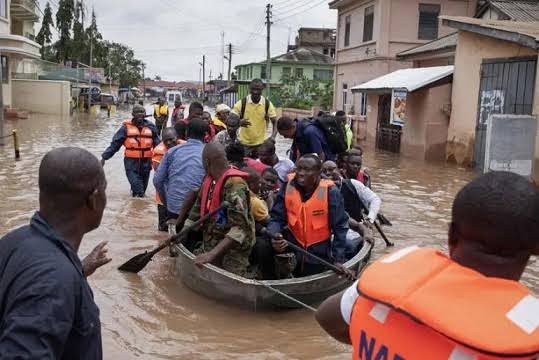
Accra, July 1, 2026 – The Ghana WASH Journalists Network (GWJN) has called on the government to implement permanent engineering and policy solutions to end Accra’s recurring flooding, warning that the latest disaster underscores decades of failures in urban planning, environmental management and infrastructure development.
In a statement issued on Wednesday, the Network described the recent floods, which claimed lives, destroyed homes and businesses, displaced residents and disrupted economic activities, as a national tragedy that demands urgent and coordinated action rather than seasonal emergency responses.
GWJN expressed condolences to families who lost loved ones and sympathised with residents whose homes, properties and livelihoods were affected.
“The recurrence of this national tragedy has become unacceptable. Year after year, governments promise lasting solutions, committees are formed, reports are prepared, emergency interventions are undertaken, yet the same communities continue to flood whenever heavy rains occur. Ghana deserves better,” the statement said.
According to the Network, while flooding is a natural occurrence, the disasters witnessed in Accra are largely caused by human activities, including poor planning, weak enforcement of regulations and inadequate investment in drainage infrastructure.
GWJN identified illegal construction on waterways, encroachment on wetlands and floodplains, poor land-use planning, indiscriminate dumping of refuse into drains, rapid urbanisation without corresponding drainage infrastructure, and poorly engineered road projects as some of the major factors contributing to the city’s perennial flooding.
The Network stressed that flood prevention should become a permanent national development priority, rather than a reactive exercise undertaken only during the rainy season.
It called on the Ghana Hydrological Authority (HYDRO), Metropolitan, Municipal and District Assemblies (MMDAs), the Land Use and Spatial Planning Authority (LUSPA), the Environmental Protection Authority (EPA), the Ministry responsible for Works and Housing and other relevant agencies to intensify efforts to protect wetlands, preserve natural drainage corridors and enforce planning regulations.
GWJN also urged authorities to ensure that all future road projects incorporate comprehensive hydrological studies, properly designed storm-water drainage systems, culverts, retention ponds and discharge channels capable of directing runoff safely into rivers, lagoons and ultimately the sea.
“The destruction of wetlands for housing, commercial developments and infrastructure must cease immediately. Wetlands are nature’s flood control systems. Every wetland lost increases the risk of devastating floods,” the Network stated.
The statement further questioned the progress made by the Anti-Flood Taskforce established by President John Dramani Mahama in March 2025 and chaired by Deputy Chief of Staff (Operations), Stanislav Xoese Dogbe.
While acknowledging that the taskforce undertook aerial inspections of flood-prone areas and announced plans to desilt major drains, GWJN called on the government to disclose the taskforce’s findings and explain what recommendations have been implemented to prevent future flooding.
“The Ghanaian people deserve transparency and accountability on this important national assignment,” the Network said.
GWJN also appealed to the Mahama administration to demonstrate political will by enforcing planning laws without exception, demolishing structures obstructing waterways, reclaiming wetlands, improving engineering standards for public infrastructure and holding public officials accountable for negligence.
Beyond government intervention, the Network urged citizens to stop dumping refuse into drains and desist from illegal developments on waterways, noting that public behaviour continues to contribute significantly to flooding.
It further called on Metropolitan, Municipal and District Assemblies and relevant government agencies to protect drinking water sources affected by the floods by testing and treating submerged piped water systems and boreholes for contamination, other harmful impurities. It also recommended the provision of emergency safe drinking water to affected communities.
GWJN pledged to intensify media advocacy on environmental sanitation, drainage protection and flood prevention while collaborating with civil society organisations and state institutions to expose individuals and developers whose activities contribute to flooding.
“The time for temporary interventions has passed,” the Network said. “The knowledge exists. The engineering expertise exists. The institutions exist. What Ghana needs now is coordinated implementation, strict enforcement and sustained political commitment to end this decades-old challenge.”
Source: www.climatewatchonline.com