

ACCRA, Ghana — Rising temperatures are increasingly threatening the health, livelihoods and incomes of market women in Accra, with vegetable sellers among those facing significant losses as extreme heat accelerates the deterioration of perishable goods.
The concern was raised during a heat awareness initiative organised by the Green Africa Organization (GAYO) in partnership with the Accra Metropolitan Assembly (AMA), HERA and the Green Africa Youth Organization (GAYO), to draw attention to the growing impacts of extreme heat in Ghana.
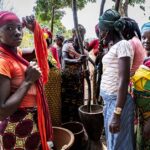
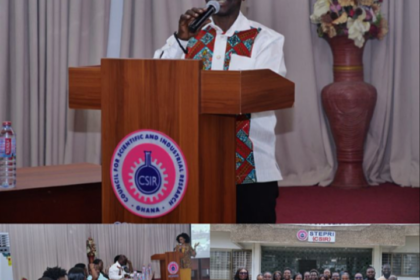
Speaking during the initiative, Mrs. Betty Osei-Bonsu Adjei, Operations and Programmes Director of the Green Africa Organization (GAYO), said the programme seeks to understand how rising temperatures are affecting market women and other vulnerable groups who spend long hours working outdoors.
She said the initiative is also aimed at identifying practical interventions that can help vulnerable communities adapt to increasing heat while contributing to efforts to address its underlying causes.

“It’s about the market women, the people, the marginalised group of people who spend their everyday outside shade just to bring food to their table or bring food home to their children and their families,” she said.
According to Mrs. Osei-Bonsu Adjei, prolonged exposure to heat is not only affecting the health of market women but also their ability to earn a living.
She said excessive heat can cause food and other goods to deteriorate, forcing traders to take additional measures to preserve their products and potentially resulting in financial losses.
Heat poses serious health risks
Mrs. Osei-Bonsu Adjei said extreme heat is often underestimated because many people do not recognise its direct links to health, income and the environment.
“There’s a huge correlation between heat and health. There’s a huge correlation between heat and environment, heat and flooding, heat and income, even revenue generation,” she said.
She recalled a severe heat episode at a market in Accra in December when some market women reportedly fainted and required intervention from the Ghana National Fire Service.
Pregnant women were also reportedly among those affected.
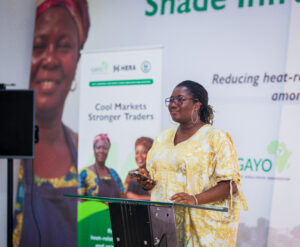
She said the incident demonstrated the severity of the heat challenge facing traders who spend several hours in markets with inadequate shade and limited cooling facilities.
Climate change and environmental pollution
Ms. Osei-Bonsu Adjei linked the rising heat to climate change and environmental pollution.
She pointed to vehicle emissions, waste mismanagement and methane emissions from landfill sites as some of the environmental pressures contributing to rising temperatures.
She said the effects of increasing heat extend across communities, affecting households, livelihoods and the environment.
According to her, the growing heat challenge requires both immediate adaptation measures and longer-term action to address the factors contributing to climate change.

Assembly pledges support
Hon. Peter Quaye, Assembly Member for the Korle Worgon Electoral Area under the Odododiodio Constituency and Chairman of the Sub-Metro Committee, said the initiative could provide important support to traders, particularly women who sell vegetables and other perishable goods.
He said market women often transport agricultural produce from rural communities to Accra, only for some of the goods to deteriorate because of heat before they can be sold.
“Most of the market women, especially the vegetable sellers, whenever they transport goods from the villages to the market, sometimes it gets deteriorated. This initiative is going to help them a lot,” he said.
Hon. Quaye commended GAYO for the initiative and pledged the Assembly’s support for maintaining the project and infrastructure introduced through the programme.
He said the Assembly would also explore opportunities to extend similar interventions to other sub-metropolitan areas.
“On behalf of the Accra Metropolitan Assembly (AMA), I’m going to ensure that we maintain this particular project and infrastructure, so that in the near future, it can also be transported to other sub-metros,” he said.
He expressed appreciation to GAYO and its partners for bringing the initiative to the district and said sustained collaboration would be necessary to address the growing heat challenge.
Call for stronger heat adaptation
Mrs. Osei-Bonsu Adjei called for greater investment in public awareness and infrastructure to protect people who work outdoors from extreme heat.
She said markets need adequate shading and other measures that can reduce heat exposure and improve working conditions for traders.
She also urged communities to educate themselves and their children about the risks associated with excessive heat and climate change.
She said one of the key misconceptions in communities is that heat has no significant direct impact on people’s lives.
“ My advice to the communities would be to begin to educate ourselves on the impact of heat. Try and avoid a lot of exposure to heat because of the impact it has to our health, and lastly, also educate our children and our communities on how heat can influence us and the environment we find ourselves in,” she said.
The initiative highlights the growing need to treat extreme heat as both a public health and economic issue, particularly for informal workers whose livelihoods depend on spending long hours in open and poorly shaded environments.
For Ghana’s market women, protecting against extreme heat is therefore not only about comfort. It is increasingly about protecting lives, reducing food losses and safeguarding household incomes as the country experiences rising climate-related heat risks.
Source: www.climatewatchonline.com