

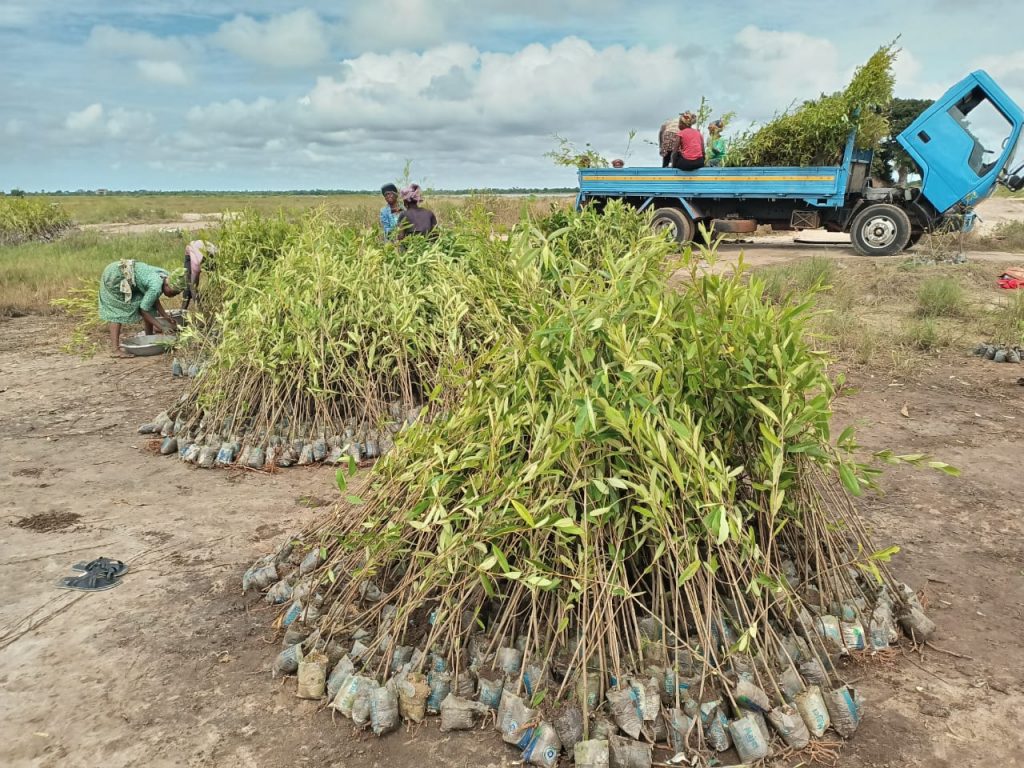
Mangroves do far more than decorate coastlines. They are nature’s frontline defence against storms, floods, erosion, and rising seas. Their tangled root systems stabilise shorelines, absorb wave energy, store large amounts of carbon, and create vital breeding grounds for marine life that millions of people depend on for food and livelihoods.
Yet across the world, these ecosystems are disappearing at an alarming rate.
Cleared for construction, aquaculture, urban expansion, and short-term economic gain, mangrove forests are often treated as obstacles to development rather than infrastructure for survival. But the cost of removing them arrives quickly—stronger storm surges, collapsing coastlines, destroyed homes, declining fisheries, and increasingly vulnerable coastal communities.
The irony is difficult to ignore: the same trees cut down for convenience are often the very natural barriers that could have protected lives and economies.
Climate resilience, research increasingly shows, is not built only with concrete walls or billion-dollar engineering projects. Sometimes, it grows quietly along the shoreline.
Evidence from the Coast
Recent field observations and environmental communication work by Climate Watch Managing Editor Ishmael Barfi highlight the critical role mangroves play in coastal protection and climate adaptation.
His reporting and field-based documentation across coastal zones in Ghana point to a consistent pattern: communities with degraded mangrove systems experience more severe erosion, saltwater intrusion, and storm-related damage compared to areas where mangroves remain intact or have been restored.
Barfi’s work also underscores how mangroves function as natural carbon sinks, absorbing and storing carbon at rates significantly higher than many terrestrial forests. This positions them not only as ecological assets but also as important tools in global climate mitigation efforts.
In several coastal communities profiled in his studies, local fishers also reported declining fish stocks in areas where mangroves had been cleared, reinforcing the link between ecosystem destruction and livelihood insecurity.
Nature-Based Infrastructure, Not Waste Land
Scientific evidence strongly supports what coastal communities have long known.
Mangroves can reduce wave height significantly during cyclones and storm surges, acting as natural buffers that protect inland settlements. Their complex root systems trap sediments, stabilise shorelines, and slow coastal erosion processes that are accelerating under climate change.

They also play a critical climate role. Studies show that mangrove ecosystems can store up to four times more carbon than many terrestrial forests, making them among the most efficient natural carbon storage systems on the planet.
Despite this, mangroves continue to be cleared in many regions for short-term economic activities such as shrimp farming, infrastructure expansion, and coastal development.
The Cost of Removal
The loss of mangroves is not just an environmental issue—it is an economic and social one.
When mangroves are destroyed, coastal communities often bear the cost through damaged homes, destroyed fishing grounds, increased disaster recovery expenses, and reduced natural protection against extreme weather events.
Barfi’s field notes from coastal Ghana echo this reality, where communities repeatedly face flooding and shoreline retreat in areas where mangrove cover has been heavily degraded.
The evidence suggests a clear trade-off: short-term gains from coastal development often translate into long-term losses in resilience, livelihoods, and infrastructure stability.
Restoration as Infrastructure
Across climate science and policy circles, there is growing recognition that ecosystem restoration must be treated as a core part of national infrastructure planning.
Mangroves are increasingly being reframed not as environmental “extras,” but as essential natural infrastructure that delivers measurable economic and protective value.
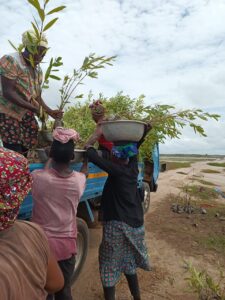
As climate risks intensify, integrating mangrove restoration into coastal development strategies, corporate sustainability plans, and national adaptation frameworks is becoming less of an option and more of a necessity.
Conclusion: Nature Always Responds
Mangroves remind us of a simple but often ignored truth: nature does not disappear quietly.
When these ecosystems are removed, the consequences do not remain abstract. They arrive in the form of floods, collapsing coastlines, and displaced communities.
As Ishmael Barfi’s work along Ghana’s coastline shows, protecting mangroves is not just an environmental concern—it is a matter of survival, resilience, and long-term economic sense.
Because when natural defences are destroyed, the damage rarely stays “natural.”
And in the end, nature always sends the invoice.
Source: www.climatewatchonline.com