
Accra, Ghana — Ghana’s journey from having virtually no framework for managing electronic waste to becoming one of Africa’s leading examples of structured e-waste governance was celebrated on Tuesday with the launch of a landmark publication documenting a decade of transformation in the sector.
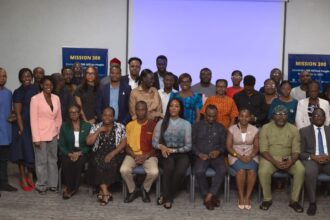
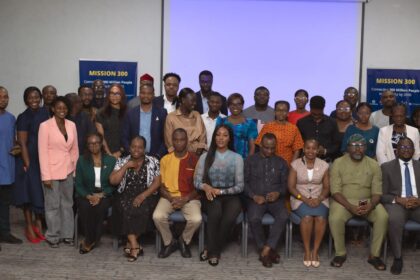
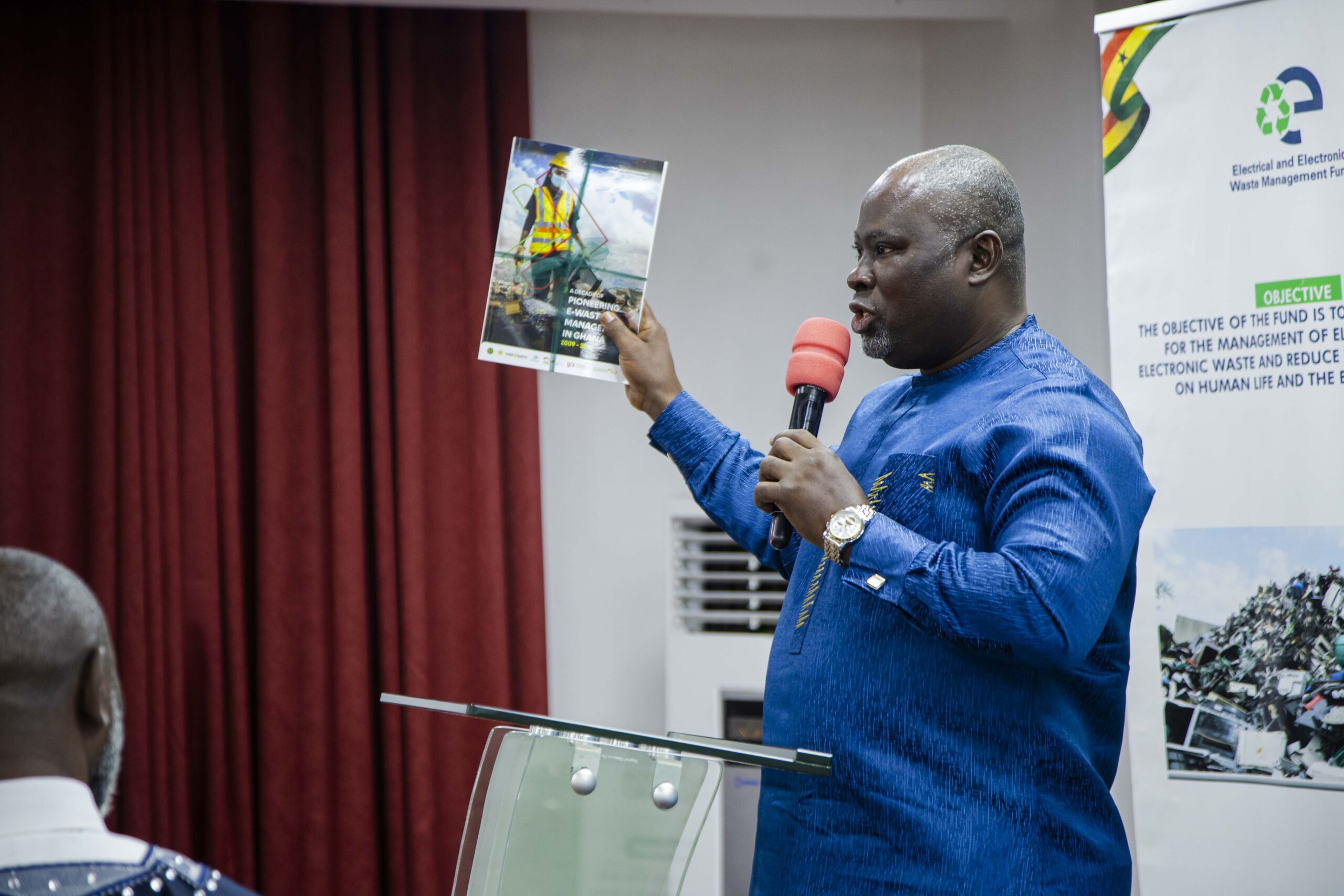
The publication, titled A Decade of Pioneering E-Waste Management in Ghana (2009–2019), was launched by Green Advocacy Ghana (GreenAd) in collaboration with the E-Waste Management Fund, Pure Earth, and GIZ Ghana at the Mikaddo Conference Centre in Accra.
The event also featured a recognition ceremony honouring government agencies, researchers, development partners, and informal sector workers whose contributions helped shape Ghana’s e-waste management landscape over the past decade.
From Uncharted Challenge to National Priority
Speaking at the launch, stakeholders reflected on how Ghana’s e-waste management journey began in 2009 when GreenAd, working with the then Ministry of Environment, Science and Technology (MEST) and the Environmental Protection Agency (EPA), developed the country’s first national proposal on electronic waste importation and management.
At the time, public awareness of e-waste was low, technical expertise was limited, and no legal framework existed to regulate the sector.
That proposal became the foundation for a decade of research, policy development, stakeholder engagement, and practical interventions that ultimately transformed e-waste management into a nationally coordinated programme.
Research Drives Policy Action
A key theme emerging from the publication is the critical role research played in shaping policy and intervention strategies.
Between 2009 and 2019, eight major studies were conducted to better understand the environmental, health, and economic dimensions of e-waste in Ghana.
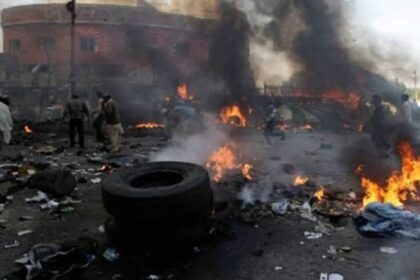
Among the most influential was the Toxic Sites Identification Programme, which found pollution levels at the Agbogbloshie scrapyard to be among the highest in the world, earning the site a place on global lists of the world’s most polluted locations.
Health assessments also revealed elevated concentrations of hazardous substances, including lead, chromium, cobalt, and selenium among workers engaged in informal recycling activities.
Researchers further found that Ghana’s e-waste sector employed approximately 33,600 people nationwide and generated an estimated annual economic value of between US$105 million and US$268 million, despite operating largely within the informal economy.
Transforming Research into Practical Solutions
The decade also saw the implementation of several pilot projects aimed at reducing environmental pollution and improving livelihoods within the sector.
One notable intervention was the establishment of the Agbogbloshie Recycling Centre (ARC) in 2014 through a partnership involving GreenAd, Pure Earth, the National Youth Authority, and the Greater Accra Scrap Dealers Association.
The centre introduced motorised cable-stripping machines as an alternative to the widespread practice of burning electrical cables to recover metals.
By providing cleaner recovery methods, workers were able to extract copper and aluminium more safely while earning higher market returns.
Building on this success, the GIZ-OekoPilot Incentive System was introduced between 2018 and 2019, offering payments to collectors for waste cables and encouraging environmentally sound recycling practices.
The initiative processed more than 27 tonnes of waste cables through nearly 1,400 transactions and later informed the development of larger-scale national programmes.
Between 2020 and 2022, subsequent incentive schemes facilitated the recovery of hundreds of thousands of pounds of cables, batteries, and plastics that would otherwise have been burned or improperly discarded.
Landmark Legal Reforms
A major milestone highlighted in the publication was the passage of the **Hazardous and Electronic Waste Control and Management Act, 2016 (Act 917)** and its accompanying regulations.
The legislation established Ghana’s first comprehensive legal framework for e-waste management, introducing measures such as the eco-levy on imported electrical and electronic equipment and creating the legal basis for the National E-Waste Management Fund.
Stakeholders say the law has provided the institutional foundation needed to regulate the sector, mobilise resources, and support environmentally sound recycling practices.
Recognising Key Contributors
The launch event paid tribute to the diverse group of actors whose efforts contributed to the sector’s development.
Awards were presented to policymakers, scientists, development partners, civil society organisations, and informal sector workers who played pivotal roles in advancing research, policy reform, advocacy, and implementation.
Organisers noted that progress would not have been possible without the active participation of informal recyclers, whose cooperation helped bridge the gap between policy development and practical implementation.
Looking Ahead
While the publication celebrates achievements made between 2009 and 2019, stakeholders stressed that significant work remains to be done.
The National E-Waste Management Fund is expected to play a central role in expanding Ghana’s e-waste management system from pilot initiatives to a fully integrated national programme.
Future priorities include establishing regional recycling and processing facilities, expanding take-back and collection networks, deploying digital traceability systems, and supporting the formalisation of informal sector workers through access to training, health services, and modern equipment.
Stakeholders say the long-term objective is to build a circular economy for electronics in Ghana—one that recovers value from discarded devices while protecting public health, creating jobs, and safeguarding the environment.
As electronic consumption continues to rise across Africa, Ghana’s experience is increasingly being viewed as a model for how research, policy, and partnership can work together to address one of the continent’s fastest-growing waste challenges.
Source: www.climatewatchonline.com