

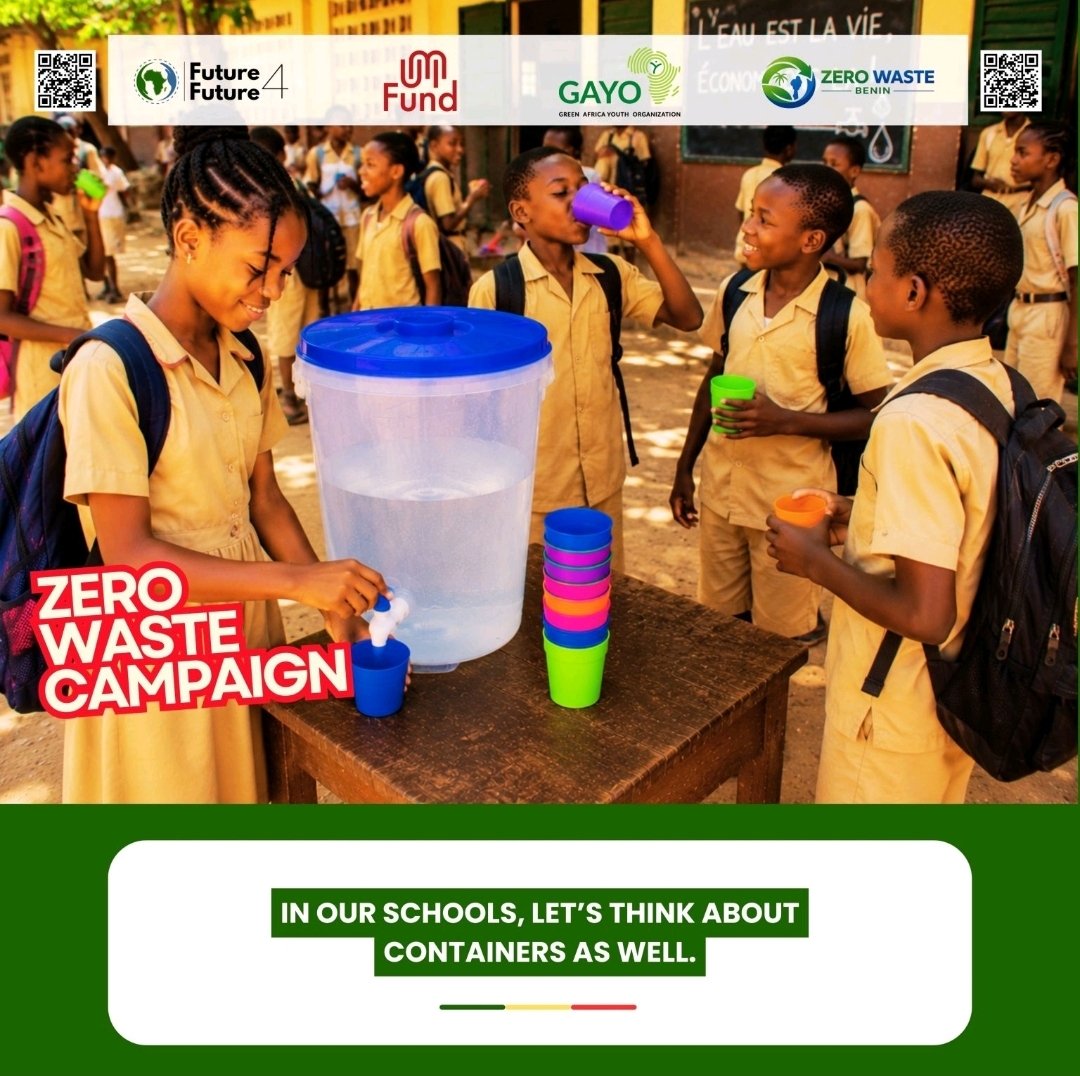
Cotonou, Benin, — Environmental advocacy group Future for Future has launched a Zero Waste Campaign in Benin, urging schools to reduce their reliance on single-use plastics and adopt safer, reusable containers for drinking water as part of efforts to protect children’s health and curb plastic pollution.
The campaign is encouraging educators, parents, and students to pay closer attention not only to the quality of water consumed in schools but also to the containers used to serve it.
“Safe drinking water is essential for children’s health, concentration, and learning. But what if the container deserves as much attention as the water itself?” the campaign asks.
According to Future for Future, thousands of students across schools rely on shared water stations during break periods. While access to clean drinking water remains critical, the organisation argues that the widespread use of disposable plastic cups and plastic containers creates an often-overlooked environmental challenge.
The group says reducing dependence on single-use plastics in schools is an important step toward building a culture of sustainability among young people.
To underscore the urgency of the issue, Future for Future cited findings from several international organisations.
According to UNICEF, nearly 1,000 children under the age of five die every day from diseases linked to unsafe water, sanitation, and hygiene. The World Health Organization estimates that approximately 80 percent of infectious diseases in developing countries are associated with unsafe water and poor sanitation conditions.
Meanwhile, UNESCO reports that more than 584 million children worldwide still attend schools without basic drinking water services, while the United Nations Environment Programme estimates that more than 11 million tonnes of plastic waste enter aquatic ecosystems annually. A significant proportion of this waste comes from products used for only a few minutes before being discarded.
Future for Future noted that many plastic products can persist in the environment for hundreds of years, contributing to pollution of rivers, oceans, and communities.
“The water children drink matters, but the containers used to serve it matter too,” the organisation stated. “Zero waste begins with reducing our dependence on everyday plastic items.”
As part of the campaign, Future for Future is encouraging schools to gradually transition to durable and reusable drinking containers, reduce reliance on disposable plastic cups, and adopt materials designed for long-term use.
The initiative also seeks to raise awareness among students about the environmental consequences of plastic pollution and promote responsible consumption habits from an early age.
The organisation is further calling on schools, parents, local authorities, and communities to work together to develop practical and sustainable alternatives to single-use plastics.
Future for Future believes school drinking water stations can serve not only as places for hydration but also as platforms for environmental education and behavioural change.
“Protecting children’s health while reducing plastic pollution is a goal we can achieve together,” the group said.
The Zero Waste Campaign forms part of broader efforts to promote a cleaner, healthier, and more sustainable future for children and communities across Benin.
Source: www.climatewatchonline.com