
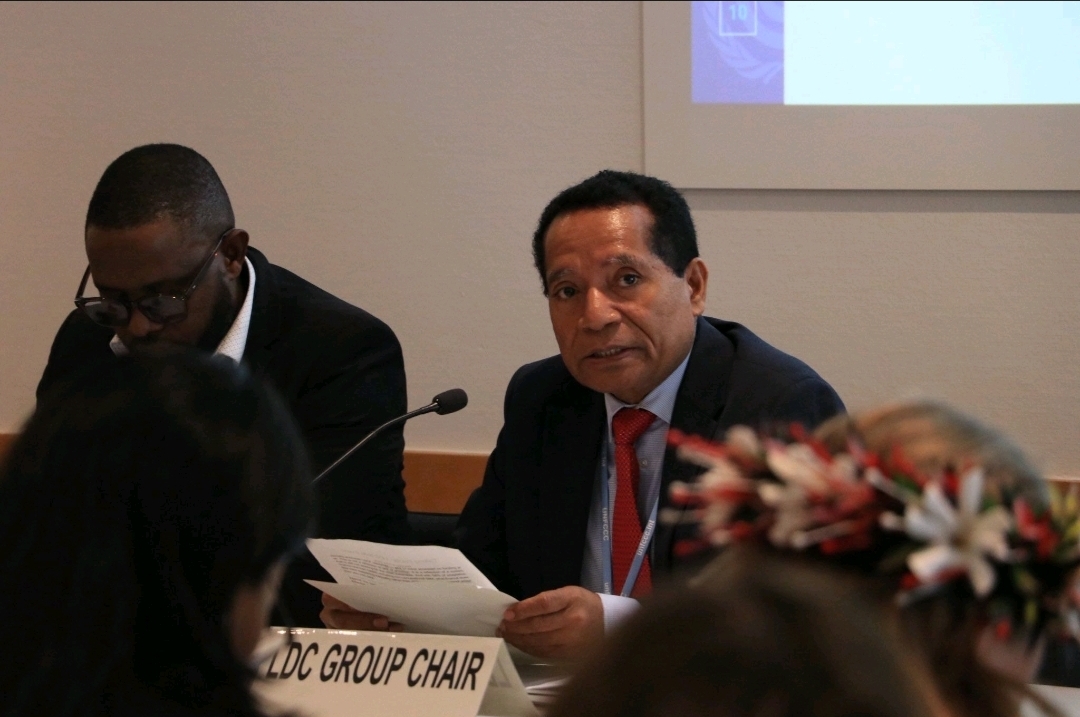
Bonn, Germany — Uganda has reaffirmed its support for the Least Developed Countries (LDC) Group in calling for stronger international action to advance climate adaptation, as negotiations continue at the UNFCCC Subsidiary Body 64 (SB64) Climate Change Conference in Bonn.
Uganda emphasized the importance of the work of the Least Developed Countries Expert Group (LEG), particularly in supporting the development and implementation of National Adaptation Plans (NAPs), which are seen as critical tools for building climate resilience across vulnerable nations.
The position was highlighted as part of ongoing discussions at SB64, where countries are reviewing progress on adaptation planning and the means of implementation for climate action under the UN climate process.
Adaptation Planning Not Enough Without Finance
Uganda stressed that while National Adaptation Plans are essential for guiding resilience strategies, planning alone is not sufficient without concrete support for implementation.
The country called for predictable and accessible grant-based climate finance, alongside strengthened capacity-building and enhanced technology transfer to support vulnerable countries in translating plans into action.
Uganda also highlighted the need for sustained support for the **Least Developed Countries Initiative for Effective Adaptation and Resilience (LIFE-AR), which aims to strengthen long-term adaptation capacity in the world’s most climate-vulnerable nations.
Adaptation as a Present Necessity
According to Uganda, adaptation must be treated as an immediate priority rather than a long-term aspiration, given the growing impacts of climate change on livelihoods, ecosystems, and economic stability in developing countries.
The country aligned with the LDC Group’s position that delivering on existing commitments is essential to ensuring that adaptation plans do not remain on paper but are transformed into practical interventions that protect communities and strengthen resilience.
Uganda further underscored that climate impacts are already being felt across vulnerable regions, making urgent implementation of adaptation measures critical for survival and sustainable development.
Call for Action-Oriented Climate Support
As SB64 continues in Bonn, Uganda is expected to remain engaged in negotiations aimed at strengthening global support for adaptation finance, capacity-building, and technology transfer.
The country reiterated that effective climate action must prioritize those most at risk, ensuring that international commitments translate into measurable outcomes on the ground.
Uganda’s position adds to growing calls from developing countries for a more balanced global climate response that places adaptation on equal footing with mitigation, particularly in light of increasing climate-related risks across Africa and other vulnerable regions.
Source: www.climatewatchonline.com