

Accra, Ghana – Ghanaian banks have been urged to strengthen governance and due diligence frameworks when financing carbon market projects, with experts warning that reputational risks could pose a greater threat to carbon assets than environmental factors.
Justice Akoto, a Chartered Environmentalist and sustainability expert, said confidence and credibility have become the defining factors in the global carbon market, where the value of carbon credits increasingly depends on their integrity.
According to him, carbon credits can rapidly lose market value if questions arise over the credibility of a project’s environmental claims, governance standards or transparency.
“In carbon finance, the greatest risk is often not environmental; it is reputational,” he noted. “A carbon credit can lose value overnight, not because the trees disappeared or emissions increased, but because confidence in its integrity was questioned. In today’s market, trust is becoming more valuable than the carbon asset itself.”
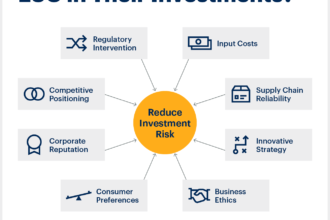
He explained that the evolving carbon market requires financial institutions to move beyond assessing projects solely on their expected financial returns and instead adopt comprehensive governance-based evaluations.
Justice Akoto said banks should establish robust internal carbon governance frameworks that assess project transparency, ownership rights, host country authorisations, community safeguards, monitoring, reporting and verification (MRV) systems, as well as alignment with Ghana’s climate commitments.
He recommended that financial institutions introduce structured due diligence checklists before approving carbon-related investments.
Among the key questions banks should consider, he said, are whether a project’s methodology is internationally recognised, whether carbon rights are legally defined, whether a credible MRV framework exists, whether all required national approvals have been secured, whether corresponding adjustment obligations have been addressed, and whether the project could face future integrity challenges.
According to him, these governance considerations are becoming as critical as conventional financial indicators such as liquidity ratios and collateral valuations.
Justice Akoto also cautioned that the global carbon market is becoming increasingly exposed to the risk of stranded carbon assets—projects that lose commercial value because of regulatory changes, weak methodologies, changing buyer expectations or concerns about environmental integrity.
“Just as fossil fuel assets can become stranded in a low-carbon economy, carbon assets can become stranded in a high-integrity market,” he said.
He advised banks to integrate carbon governance reviews into their credit approval processes, strengthen risk monitoring systems to track integrity indicators and equip relationship managers with a deeper understanding of carbon market dynamics beyond carbon pricing.
Justice Akoto concluded that the institutions best positioned to lead Ghana’s emerging climate finance sector would not necessarily be those financing the highest number of carbon projects, but those supporting projects that demonstrate the highest levels of transparency, credibility and environmental integrity.
His remarks come as Ghana continues to position itself as a key player in international carbon markets through the implementation of climate mitigation initiatives under the Paris Agreement, increasing the need for robust governance and investor confidence in carbon finance.
Source: www.climatewatchonline.com