
Accra, Ghana — Ghana is losing an estimated US$1.9 billion every year to the health and economic consequences of ambient air pollution, with more than 12,870 deaths and 316,800 cases of air-pollution-related disease recorded annually, according to a new assessment.
The figures are contained in the Investment Case for Improved Ambient Air Quality and Health in Ghana, developed by the United Nations Development Programme (UNDP) with support from Breathe Cities.
The report estimates that the annual economic burden is equivalent to 2.3 per cent of Ghana’s Gross Domestic Product (GDP), underscoring the extent to which poor air quality has moved beyond an environmental concern to become a development and public-health challenge.
The findings come as Ghana joins countries around the world to mark the International Day of Clean Air for Blue Skies, observed on September 7, under the theme “Clean Air, Healthy Choices: Acting Together for People and Planet.”
The hidden cost of breathing polluted air
The UNDP assessment shows that the largest share of the economic burden comes from premature deaths.
Of the more than 12,870 annual deaths attributed to excess ambient air pollution, about 8,180 — or 64 per cent — are estimated to be premature, occurring before the age of 70.
The health burden also includes more than 316,800 new cases of air-pollution-related diseases each year.
The report estimates that premature mortality accounts for about 98 per cent of the US$1.9 billion economic burden, while healthcare expenditure associated with air-pollution-related diseases adds another significant cost.
This means the cost of polluted air is not limited to hospitals and households. It also affects Ghana’s productivity, public finances and long-term development prospects.
Greater Accra carries a heavy burden
The situation is particularly significant in the Greater Accra Region.
The assessment estimates that excess ambient air pollution contributes to more than 2,050 deaths and 49,100 cases of disease annually in the region.
Greater Accra alone accounts for an estimated US$298 million in annual economic losses associated with ambient air pollution.
The concentration of population, vehicles, commercial activity and other emission sources in the capital region makes air-quality management an increasingly important urban policy issue.
Waste burning, transport among key sources
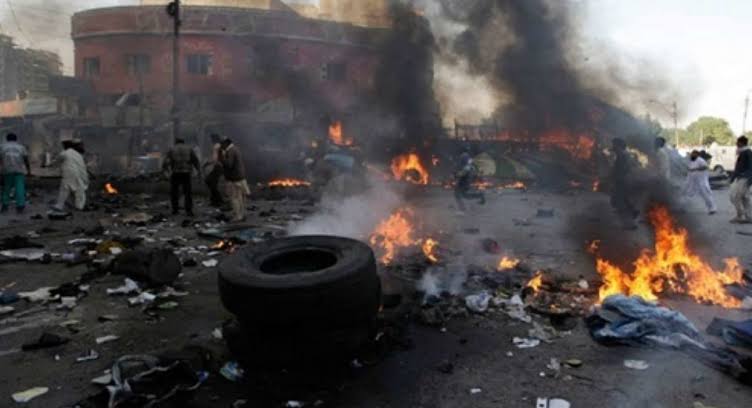
The Environmental Protection Authority (EPA) has identified several major sources of air pollution in Ghana, including emissions from transport, industrial and commercial activities, household use of firewood and charcoal, and the open burning of waste.
The Authority says it is responding through air-quality monitoring, implementation of the Environmental Protection (Air Quality Management) Regulations, 2025 (LI 2507) and the development of measures targeting emissions from different sectors.
The EPA is also working with the Driver and Vehicle Licensing Authority (DVLA) towards introducing vehicle-emissions testing as part of the roadworthiness certification process.
For industries and other permitted undertakings, the Authority says it is introducing the Ghana Online Continuous Emission Monitoring System (GOCEMS) to support real-time monitoring of emissions.
Pollution and Climate Action cannot be separated
The clean-air challenge also has implications for Ghana’s climate agenda.
The UN-backed 2026 Clean Air Day campaign is placing greater emphasis on integrating air-pollution reduction with climate action, arguing that many sources of air pollution also contribute to greenhouse-gas emissions and climate change.
This creates an opportunity for Ghana to pursue policies that deliver multiple benefits at the same time — cleaner transport, better waste management, cleaner industrial production and improved household energy use.
The UNDP investment case estimates that scaling up selected interventions could avert more than 107,000 cases of illness and nearly 5,000 deaths between 2025 and 2055.
Among the interventions assessed are improved waste-management practices, cleaner vehicle technologies and measures to reduce emissions from transport and other sectors.
Beyond awareness to implementation
While the EPA continues to call for individuals, businesses and institutions to make cleaner choices, the scale of the economic and health burden raises questions about how effectively existing measures are being implemented and enforced.
The UNDP report recommends stronger air-quality governance, improved monitoring and data sharing, increased public engagement and financing for clean-air interventions.
It also calls for stronger waste-management systems, cleaner transport and industrial practices, and greater public awareness at both national and city levels.
For Ghana, the challenge is therefore not simply to encourage citizens to avoid polluting activities but to build systems that make cleaner choices easier, affordable and enforceable.
As the country marks Clean Air Day, the figures provide a stark reminder that what Ghana loses to polluted air is measured not only in degraded environments, but also in lives, livelihoods, healthcare costs and economic productivity.
The EPA is urging citizens, communities, businesses and institutions to contribute to cleaner air through better vehicle maintenance, reduced open burning, cleaner cooking options and environmentally sustainable practices.
The larger question, however, is whether these individual choices can be matched by sustained investment, stronger enforcement and coordinated action across the sectors responsible for Ghana’s air quality.