
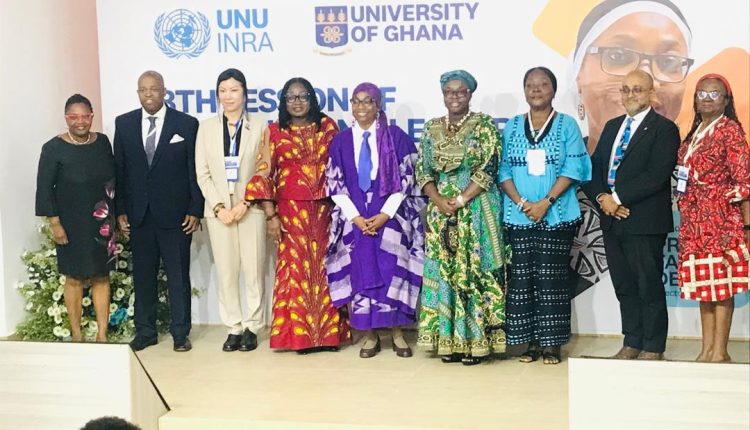
Accra, Ghana —Africa must take greater control of the global green transition and ensure that the shift towards a low-carbon economy delivers industrialisation, jobs, energy access and value addition for its people, Prof. Fatima Denton, Director of the United Nations University Institute for Natural Resources in Africa (UNU-INRA), has said.
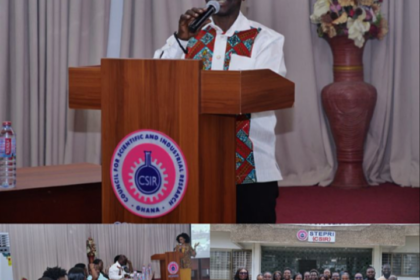
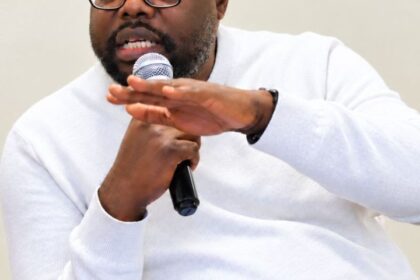
Prof. Denton made the call at the eighth Kwapong Lecture, organised by the University of Ghana, Legon, in collaboration with UNU-INRA, under the theme “The Age of Contradictions: Reflecting on Power, Narratives and Green Transitions.”
The lecture brought together academics, policymakers, diplomats, students and development practitioners to examine the power relations, competing narratives and inequalities shaping the global green transition.
Prof. Denton argued that Africa was at risk of remaining on the margins of a transition that was increasingly being shaped by powerful global actors, despite the continent’s vast natural resources and its enormous development needs.
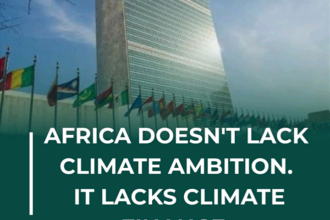
She noted that Africa contributes less than four per cent of global greenhouse gas emissions but continues to face some of the most severe consequences of climate change.
Yet, she said, African countries remain largely excluded from decisions over the rules, financing and priorities governing the global green transition.
“The green transition cannot be green if it is not just. Who controls the narrative controls the transition. Africa must not be a passive recipient of external solutions but an active author of its own transition story,” Prof. Denton said.
Beyond supplying Africa’s resources
Prof. Denton challenged the dominant portrayal of Africa as either a victim of climate change or a supplier of critical minerals required for the world’s clean-energy technologies.
She argued that such narratives risk overlooking the continent’s opportunity to use its natural resources as a foundation for local industrialisation and economic transformation.
For Africa, she said, the green transition must go beyond extracting minerals and exporting raw materials to other parts of the world.
Greater emphasis should instead be placed on value addition, domestic manufacturing, technology development and employment, allowing African economies to capture a larger share of the economic benefits emerging from the global shift to cleaner technologies.
The challenge, therefore, is not simply how Africa can transition away from carbon-intensive development, but how it can use the transition to transform its economies.
The financing contradiction
Prof. Denton also highlighted the imbalance in global climate finance, particularly the persistent gap between resources available for mitigation and those reaching vulnerable countries for adaptation and resilience.
She said many African countries already facing significant development and debt pressures are being compelled to borrow to finance responses to climate impacts they contributed relatively little to creating.
The situation, she suggested, exposes one of the central contradictions in the global climate agenda: countries with the least historical responsibility for climate change are often among those facing the greatest costs of responding to it.
For Africa, securing fairer and more accessible climate finance is therefore central to ensuring that the green transition does not deepen existing inequalities.
Universities must shape the narrative
Prof. Denton called on African universities to play a stronger role in challenging dominant narratives and producing knowledge that reflects the continent’s realities.
She said institutions such as the University of Ghana have a responsibility to help develop alternative perspectives on climate change, natural resources and sustainable development.
African research institutions, she argued, should not merely interpret policies and ideas developed elsewhere but should contribute to defining the questions, priorities and solutions that shape the continent’s future.
This requires stronger links between research, policymaking, industry and communities so that knowledge generated within African institutions can influence both national development strategies and international negotiations.
From transition to transformation
The eighth Kwapong Lecture ultimately placed the question of power at the centre of Africa’s green-transition debate.
The issue, Prof. Denton suggested, is not whether Africa should participate in the global green economy, but whether it will have sufficient influence to determine what that transition means for its people.
A transition that expands access to clean and affordable energy, creates decent employment, strengthens domestic industries and enables African countries to add value to their natural resources could become an engine of development.
But one that leaves Africa exporting raw materials while importing green technologies risks reproducing longstanding patterns of economic dependency.
The Kwapong Lecture series, instituted in honour of Emeritus Professor Alexander Kwapong, former Vice-Chancellor of the University of Ghana, seeks to stimulate intellectual reflection on major issues confronting Ghana, Africa and the wider world.
The eighth edition therefore offered more than an academic discussion on climate change. It raised a fundamental development question for Africa: Who gets to write the rules of the green economy—and who ultimately benefits from them?
Source: www.climatewatchonline.com