
Report By: Ishmael Barfi
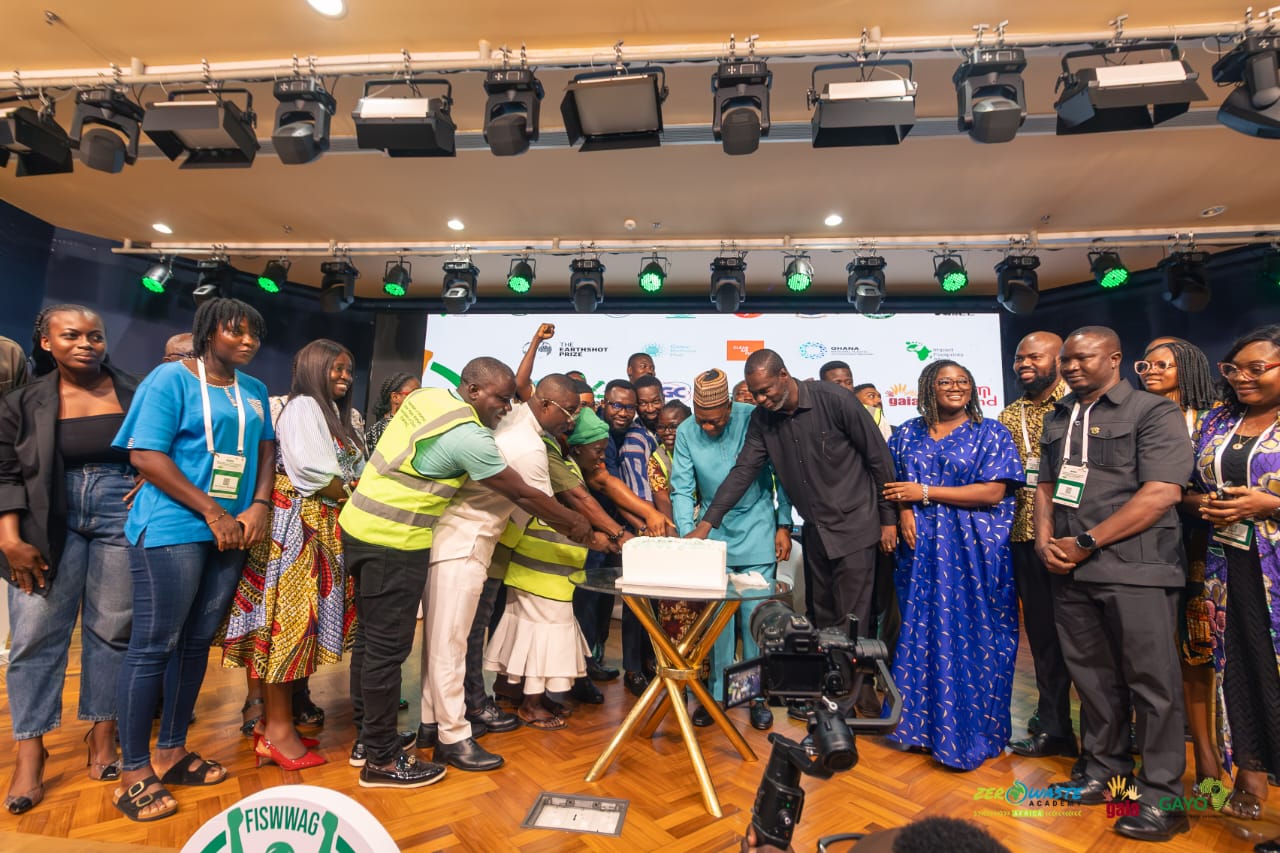
Accra, Ghana — The Green Africa Youth Organization (GAYO) has pledged to provide sustained financial, organisational and policy support to Ghana’s newly established Federation of Informal Sector Waste Workers Associations of Ghana (FISWWAG), saying the federation must become a functional platform for advancing the rights and interests of informal waste workers.
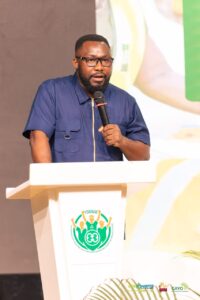
GAYO Executive Director, Richard Matey, said the organisation would support the federation beyond its launch by providing initial resources to enable members to organise, hold regular meetings and participate meaningfully in policy discussions.
He said the initiative was driven by the recognition that informal waste workers are critical to waste collection and recovery across Ghana and Africa.
“Informal waste pickers are the backbone of waste collection and waste recovery,” Matey said, noting that formal municipal solid waste systems do not adequately cover the waste generated in communities.
According to him, informal waste workers are already helping to address the continent’s waste challenge and their contribution must be recognised as part of efforts to build a zero-waste Africa.
From recognition to participation
Matey said GAYO’s support would focus not only on organising the workers but also on ensuring that they are formally recognised and included in decisions affecting the waste-management sector.
He said the federation provides an opportunity for workers who have historically operated at the margins of formal systems to have a collective voice in policy processes.
“GAYO is poised to ensure that they are well organised, they are recognised, and also they are included in decision-making processes, so that the impact of their work can be scaled up,” he said.
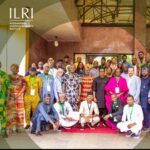
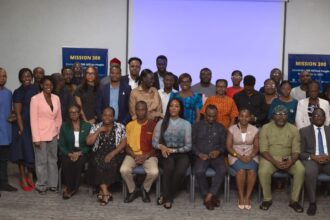
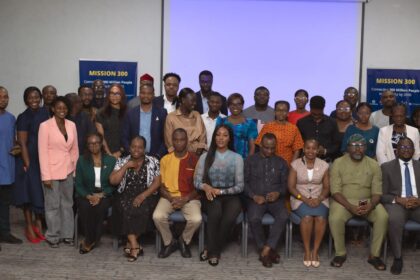
The federation was launched on July 31, 2026, as a national platform for informal waste workers. GAYO has described the initiative as a move towards giving waste workers a formal and recognised voice while advocating safer working conditions, fair pay and dignified livelihoods.
Support beyond the launch
Matey stressed that the formation of the federation would not be treated as a one-off event.
“The uniqueness of this federation is that it’s not going to be a one-day event where we convene and then we go back to sleep.”
He said GAYO would provide initial resources to help the federation organise and maintain continuous engagement among its members.
Beyond organisational support, GAYO intends to help ensure that the perspectives of informal waste workers are reflected in public policy.

“We are also beyond that going to support them to ensure that their perspectives are integrated into policy,” he said.
Matey said such engagement could help government better understand the realities facing informal waste workers and support efforts to formalise their contribution to the waste-management system.
Informal workers key to zero-waste ambitions
The GAYO Executive Director said recognising informal waste workers was essential to achieving a more inclusive circular economy and a zero-waste future.
Informal waste workers collect, sort and recover materials that might otherwise end up in landfills or the environment. GAYO has been working on zero-waste initiatives in Ghana, including projects that engage informal waste workers and local authorities. The organisation’s wider work focuses on waste management, circular economy development and climate action.
Matey said their contribution should therefore be matched with greater recognition, resources and participation in decision-making.
For GAYO, strengthening the federation is also part of building a just transition in which workers who contribute to environmental protection are not left behind.
The organisation says sustained support for the federation will help create a stronger platform through which informal waste workers can advocate for occupational health and safety, social protection, fairer livelihoods and greater participation in Ghana’s waste-management policies.
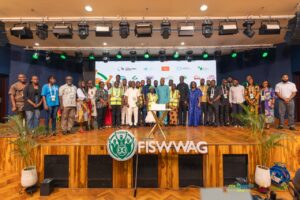
Matey said GAYO would continue working with the federation and relevant stakeholders to ensure that the formalisation process translates into practical improvements in the lives and working conditions of informal waste workers.
The success of the initiative, he suggested, will ultimately depend on whether the new federation can move beyond recognition to become an effective voice in the policies and systems shaping Ghana’s waste economy.
Source: www.climatewatchonline.com