
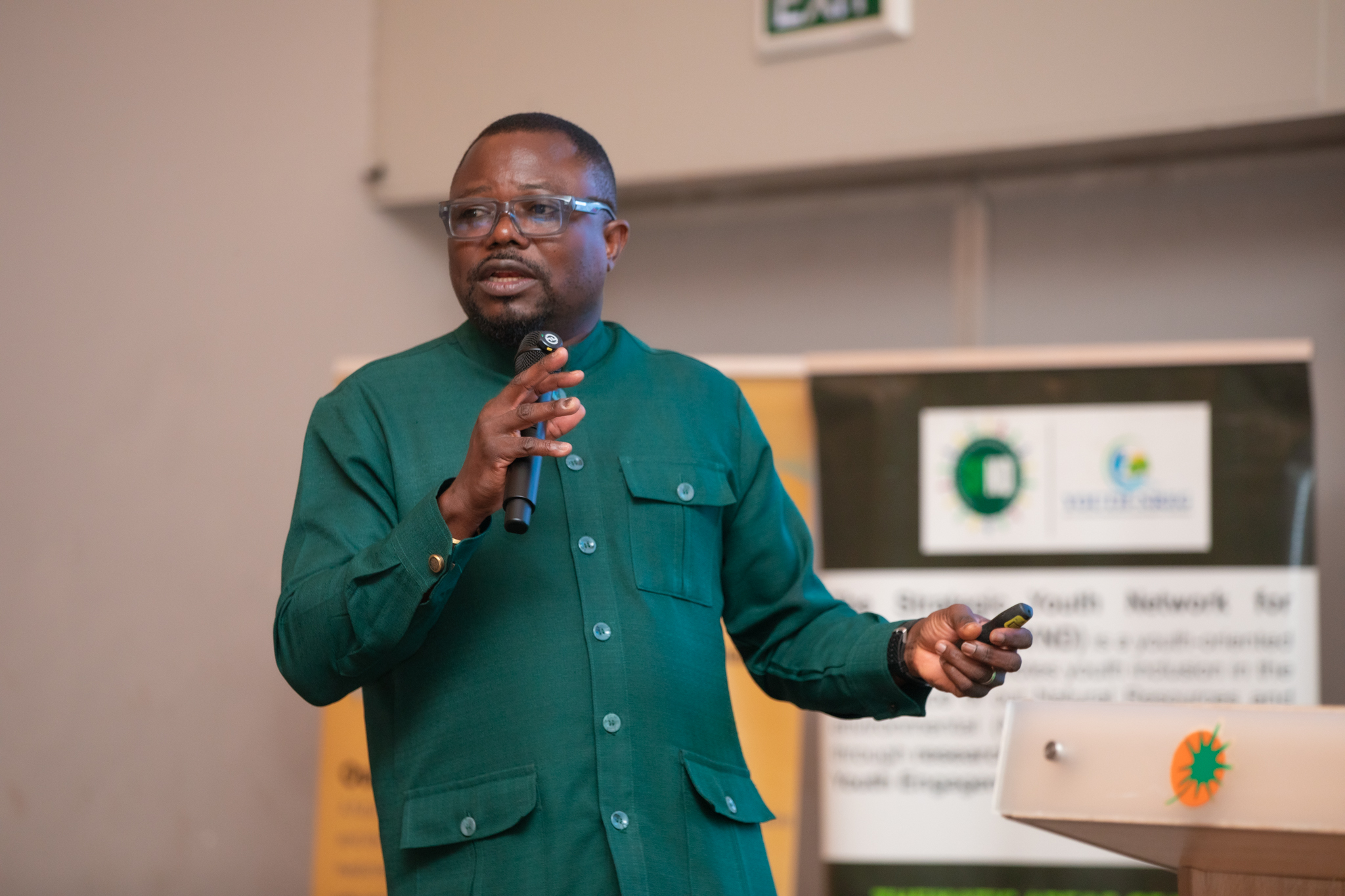
Accra, Ghana — Robert Sogbadji, Deputy Director for Nuclear and Emerging Green Technologies at the Ministry of Energy and Green Transition, has highlighted financing and infrastructure gaps as major challenges confronting Ghana’s energy transition agenda.
Speaking at a meeting of the Ghana Energy Transition Consortium (GETC) convened by the Strategic Youth Network for Development (SYND) in Accra, Dr. Sogbadji stressed the need for substantial investment in renewable energy infrastructure to enable the country achieve its long-term transition targets.
According to him, Ghana’s energy transition is expected to cost approximately US$562 billion, making both domestic and international financing critical to the implementation of renewable energy projects and supporting infrastructure.
“The Renewable Energy Investment and Grid Transition Fund is supposed to support renewable energy infrastructure, but raising the required capital remains a major challenge,” he said.
He explained that government is pursuing measures to bridge infrastructure gaps while strengthening regulatory systems to improve investor confidence in the renewable energy sector.
As part of these efforts, Dr. Sogbadji disclosed that the government is establishing a Renewable Energy Authority to serve as a central regulatory institution for the sector.
“The Renewable Energy Authority is expected to become a one-stop-shop regulator for the renewable energy sector,” he said, noting that the move is intended to address concerns over substandard renewable energy technologies entering the market.
According to him, the lack of standardisation and quality assurance in some renewable energy installations risks undermining government efforts to promote sustainable energy adoption across the country.
On decentralising Ghana’s energy transition agenda, Dr. Sogbadji said government is working to extend implementation of the National Energy Transition Framework to Metropolitan, Municipal and District Assemblies (MMDAs).
He explained that authorities are currently developing operational and sustainability models for the initiative, with pilot programmes expected to begin in selected districts and metropolitan assemblies.
“We are still assessing the modalities for implementation and sustainability, but pilot projects with selected assemblies will begin soon,” he stated.
Touching on electric mobility, Dr. Sogbadji noted that Ghana already has policies and standards governing the importation and use of electric vehicles under the country’s e-mobility framework.
He said the policies are intended to ensure quality control, safety standards, and effective integration of electric vehicles into Ghana’s transport system.
Dr. Sogbadji further emphasised that Ghana’s energy transition framework was designed to balance environmental goals with socioeconomic realities, particularly the need to minimise job losses and economic disruption during the transition process.
“The transition period is intentionally long enough to allow industries and workers to adapt, retire, or be retrained,” he explained.
According to him, government is also pursuing the establishment of a petroleum hub as part of strategies to support economic stability while the country gradually transitions toward cleaner energy systems.
He stressed that the transition framework includes measures aimed at minimising adverse impacts while maximising opportunities for sustainable development, job creation, and long-term economic resilience.
The meeting brought together civil society organisations, youth groups, climate advocates, and stakeholders within Ghana’s energy sector to discuss pathways toward a just and sustainable energy transition.
Source: www.climatewatchonline.com