

Accra, Ghana — Pure Earth is supporting efforts to tackle lead contamination risks in consumer products in Ghana, following growing concerns over the presence of toxic lead levels in cookware, cosmetics, toys, soil, and other household items widely used by the public.
The organization warns that continued exposure, particularly among children and pregnant women, poses serious health and developmental risks, underscoring the need for stronger public awareness, regulation, and enforcement.
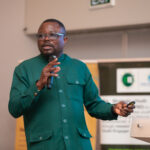
Speaking at a panel discussion during a three-day lead poisoning training workshop for journalists organised by Vital Strategies and Bloomberg Philanthropies in Koforidua, Eastern Region, Esmond Wisdom Quansah, Africa Regional Program Director for Pure Earth, said the organisation’s approach focuses on identifying and eliminating the root causes of lead exposure before they escalate into severe public health crises.
“The best way to address lead poisoning is to stop it from the source or reduce it completely,” he stated.
According to him, investigations conducted in collaboration with UNICEF and the Ghana Health Service have uncovered alarming levels of lead contamination in residential communities, particularly in areas associated with informal battery recycling and e-waste activities.
Assessments conducted in homes where children recorded elevated blood lead levels showed that nearly 90 per cent of residential soil samples collected in affected communities exceeded internationally accepted safety thresholds.
Some soil samples reportedly recorded lead concentrations as high as 56,000 parts per million (ppm), far above the United States Environmental Protection Agency’s residential soil standard, which has since been revised downward from 400 ppm to 200 ppm for children’s play areas.
The contamination was linked largely to unsafe recycling of used lead-acid batteries and informal e-waste processing activities carried out within residential communities.
Lead poisoning remains a growing global public health challenge, particularly in low- and middle-income countries. According to UNICEF, an estimated 800 million children worldwide have blood lead levels exceeding 5 micrograms per decilitre — the intervention threshold recognised by health authorities.
In Ghana, a large-scale blood lead survey conducted by Pure Earth, UNICEF, and the Ghana Health Service between 2022 and 2023 tested 3,227 children aged between one and five years across three ecological zones. The study found that 1,725 children — representing 53.5 per cent — had elevated blood lead levels above the recommended threshold.
Mr. Quansah noted that locally manufactured cookware has also emerged as a major source of exposure.
Testing conducted across Ghana’s ecological zones found that 77 per cent of sampled metal cookware contained dangerously high lead concentrations, with some products recording levels as high as 10,000 ppm based on X-Ray Fluorescence (XRF) analysis.
According to Pure Earth, many of the cooking pots are produced using contaminated scrap metals, exposing households to toxic substances during food preparation.
Traditional cosmetics were also identified as another major exposure route, particularly in Northern Ghana. Follow-up assessments found widespread use of traditional eyeliners locally known as “Chilo,” “Kohl,” or “Kaaji-Kaaji,” some of which contained extremely high levels of lead.
Mr. Quansah explained that while some products are made from naturally occurring lead-containing minerals, others imported and labelled as “lead-free” were later found to contain dangerous concentrations of the toxic metal.
Because these products are often applied directly to children’s eyes, experts warn they contribute significantly to elevated blood lead levels among children in affected communities.
Other exposure sources identified during market screening included spices, toys, contaminated water sources, and bentonite clay products commonly consumed by pregnant women.
The organisation revealed that some boreholes tested recorded higher lead concentrations than piped water systems, suggesting possible contamination of underground aquifers.
Recent market assessments also detected lead contamination in locally consumed food products, including Tom Brown, a popular cereal-based meal.
Pure Earth said its interventions have contributed to the development of Ghana’s National Action Plan on Lead Exposure Reduction, involving institutions such as the Ministry of Health, Environmental Protection Agency, Ghana Standards Authority, and the Food and Drugs Authority.
The organisation’s Toxic Sites Identification Programme continues to map polluted sites and assess exposure pathways in homes, schools, playgrounds, and markets as part of efforts to reduce childhood lead poisoning and strengthen environmental health protections.
“Lead pollution is a global issue, but low- and middle-income countries are the hardest hit,” Mr. Quansah said. “The important thing is that once the sources are identified, action can be taken to protect communities.”
Source: www.climatewatchonline.com