
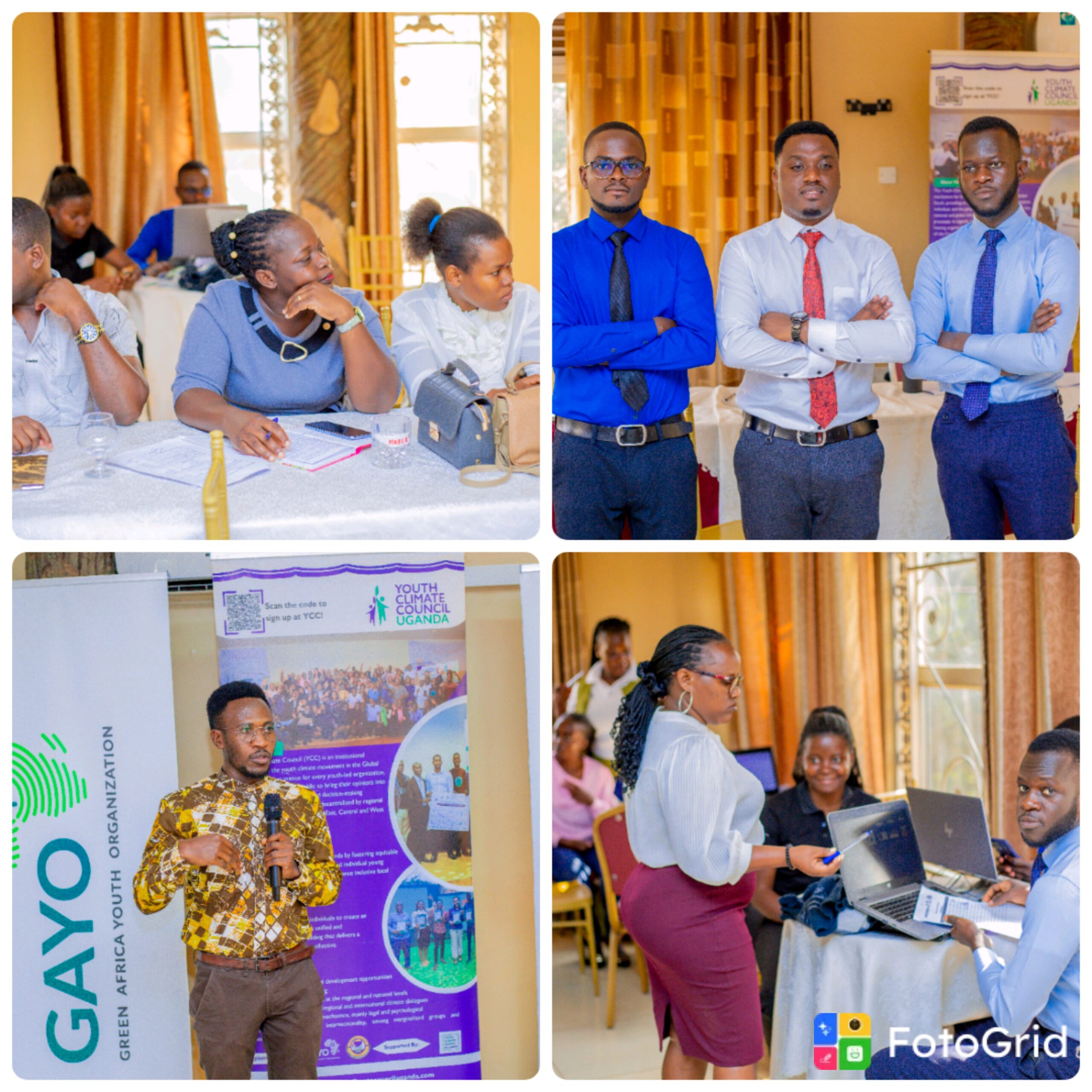
Kampala, Uganda — August 2026: More than 60 youth climate leaders from across Uganda have been equipped with new knowledge, skills and practical tools to strengthen youth-led climate action following the conclusion of the National Training of Trainers (ToT) Workshop on Advancing Youth Climate Leadership and Solutions.
Held from 10–13 August 2026, the training brought together representatives from YCC Regional Hosting Organizations and youth climate networks for an intensive capacity-building engagement focused on strengthening the ability of young people to lead, train others and drive locally relevant climate solutions.
The workshop was anchored around the theme “From Knowledge to Action: Empowering Youth to Lead Climate Solutions.”

The Training of Trainers (ToT) approach was intentional. Rather than creating another space where young people simply receive information, the programme sought to build a network of youth leaders capable of cascading knowledge, facilitating conversations, mobilising communities and strengthening climate action within their respective regions.
Building the foundation for climate leadership
The engagement began by strengthening participants’ understanding of the science and foundations of climate change, including the causes of climate change, greenhouse gases, evidence of a changing climate and its impacts on people, ecosystems and communities.
Participants also explored the difference between mitigation and adaptation, while examining emerging opportunities through renewable energy, circular economy approaches, regenerative agriculture and green innovation.

This foundation provided a basis for a broader conversation: How can young people move from understanding climate change to actively shaping the solutions?
From awareness to advocacy
A key component of the training focused on Climate Advocacy, Leadership and Civic Engagement.
Participants examined the difference between awareness, advocacy and activism and explored how young people can engage with Uganda’s climate decision-making landscape.
Through practical exercises, they explored stakeholder mapping, advocacy messaging, coalition building and the advocacy cycle, while considering how youth can engage institutions, policymakers, communities and other actors to influence climate decisions.

The sessions reinforced that youth participation in climate action must extend beyond attendance and consultation to include meaningful influence, leadership and civic engagement.
Developing trainers, not just participants
The ToT model placed particular emphasis on the ability of participants to take their learning beyond the workshop.
Participants were encouraged to reflect on how they can adapt and communicate the knowledge gained to different audiences within their regions—from youth groups and community organisations to schools, local leaders and wider networks.
This multiplier approach is critical for expanding the reach of youth climate capacity-building. A single trained leader can become a trainer, facilitator and mobiliser, creating opportunities for knowledge to travel far beyond the original training room.
Uganda’s youth climate agenda has increasingly highlighted the importance of structured youth participation, capacity building and stronger representation in climate governance. The country’s youth climate priorities have also called for greater inclusion of young people in national and district-level climate processes.

Creating space for youth-led solutions
The workshop also provided an opportunity for participants to connect climate knowledge with the realities they encounter in their own communities.
From floods and landslides to drought, environmental degradation and changing livelihoods, young people across Uganda are experiencing the impacts of climate change while also developing local responses.
The discussions therefore extended beyond the challenges themselves to consider what young people need to strengthen their response—including skills, networks, financing, mentorship, enabling policies and meaningful opportunities to participate in decision-making.
This emphasis reflects a wider recognition that young people are not only affected by climate challenges but are already contributing as organisers, innovators and community leaders.
The United Nations’ 2026 International Youth Day theme, “Different Contexts, Common Aspirations,” similarly highlights youth innovation, shared challenges and the importance of access to skills and opportunities.
From a workshop to a wider movement
As the four-day engagement concluded, the emphasis shifted from what participants had learned to what they would do with that knowledge.

The expectation is that participants will return to their respective regions and apply the skills gained through local training, community engagement, advocacy, climate communication and youth-led initiatives.
The strength of the ToT therefore lies not only in the number of people trained, but in the potential for those trained leaders to multiply knowledge and action across communities and regions.
For the Youth Climate Council Uganda and its partners, strengthening this network is part of a broader effort to create a generation of young people who are equipped to engage with climate challenges, influence decisions and develop practical solutions.
The next chapter: From knowledge to action
The conclusion of the workshop is not the end of the process. It marks the beginning of a wider responsibility for the trained leaders.

The real measure of success will be seen in the conversations they facilitate, the young people they reach, the communities they mobilise, the policies they influence and the climate solutions they help advance.
Over 60 leaders have now been equipped. The next step is to take the knowledge beyond the training room and turn it into action across Uganda.
Source: www.climatewatchonline.com