

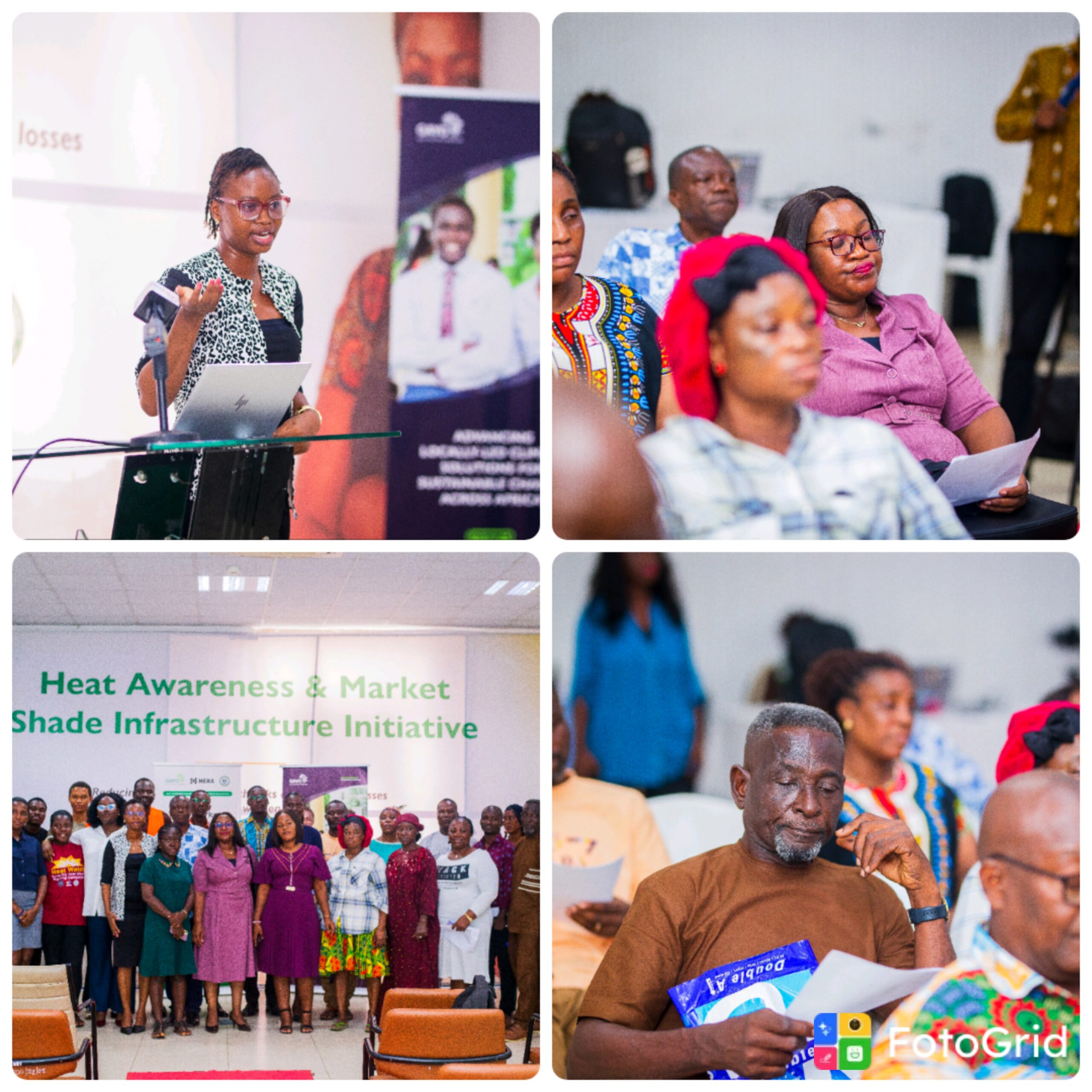
ACCRA, Ghana— The Ghana Meteorological Agency (GMet) has called for increased public awareness of the health risks associated with rising temperatures, particularly among market women and other informal workers who spend long hours exposed to heat.
Meteorologist with GMet, Francisca Baiden, said temperatures are not expected to decline and that continued increases make heat awareness and practical adaptation measures increasingly important.
Speaking during a heat awareness initiative targeting market women, Ms. Baiden said prolonged exposure to high temperatures can have serious consequences for people’s health and wellbeing.
“Temperature is not going to reduce. It’s never going to reduce, and day in and day out, temperatures are increasing. That makes creating awareness on the heat very important, especially to market women who are always exposed to high temperatures in their daily activities,” she said.
She said market women are particularly vulnerable because their daily activities often require them to remain outdoors for extended periods, increasing their exposure to extreme heat.

Heat exposure and health
Ms. Baiden urged market women to pay greater attention to the health effects of prolonged heat exposure and to take measures that can help regulate their body temperatures.
She said the provision of shade infrastructure under the initiative could help reduce heat exposure and provide traders with safer spaces during periods of high temperatures.
According to her, such interventions will be particularly useful during the hottest periods of the year, when market women face prolonged exposure to high temperatures.
She also encouraged beneficiaries of the initiative to share the heat-related information with other traders and members of their communities.
“Information travels in between people. As they have been exposed to this initiative, they should also go out there and sell this message to their co-workers or co-market women in their language, or in a language that they will understand better,” she said.

Ms. Baiden said community-to-community information sharing could help ensure that heat awareness extends beyond the immediate beneficiaries of the project.
Building resilience among informal workers
Meanwhile, Kemi Jones-Larbi, Adaptation and Resilience Coordinator for the Green Africa Youth Organization (GAYO), said the organisation is working with partners to strengthen the resilience of informal workers, particularly market women.
She said the project is being implemented with HERA, GAYO and the Accra Metropolitan Assembly (AMA), with a focus on market women in Abossey Okai and surrounding communities.
The initiative seeks to provide practical interventions, including shade infrastructure and cooling solutions, while improving awareness of heat risks and how traders can respond to them.
“We want to see that there are interventions that help market women, such as our shade and our cooling solutions, and we want to see that they are aware of heat and they know what to do to mitigate heat,” she said.

Ms. Jones-Larbi said the project is currently being piloted with the expectation that lessons from the intervention can inform efforts to extend similar measures to other communities.
She said feedback from the engagement with market women had been positive and expressed optimism that the project would deliver a more resilient environment for informal workers.
The project is expected to have a more developed infrastructure component by April 2027, according to Ms. Yajuslavi.
Heat adaptation gains urgency
The comments from GMet and the project organisers highlight the growing need for Ghana to strengthen its response to extreme heat as temperatures continue to rise.
For market women and other informal workers, access to shade, cooling solutions and reliable information could help reduce exposure to heat while protecting their health and livelihoods.
The initiative also underscores the importance of combining meteorological information, community education and practical infrastructure in Ghana’s efforts to build resilience to rising temperatures.
Source: www.climatewatchonline.com