
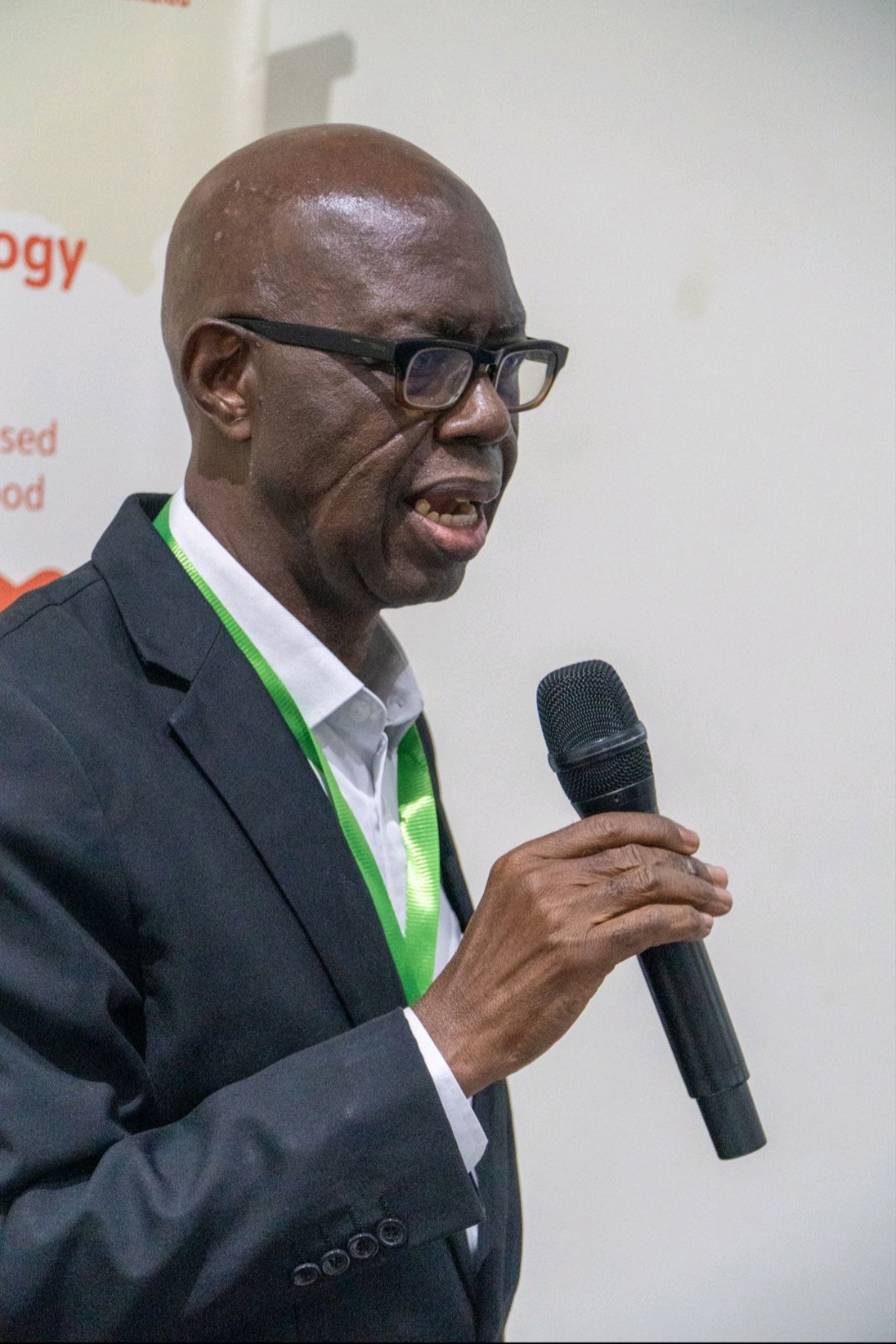
Accra, Ghana– Agricultural Development and Food Systems Economist at the University for Development Studies, Professor Saa Dittoh, has called on Ghana to develop and implement a national agroecology strategy, arguing that the country’s food security and environmental sustainability depend on strengthening nature-based farming systems rather than increasing reliance on genetically modified organisms (GMOs).
Speaking at the three-day CIRAWA Agroecology Conference in Accra, Prof. Dittoh said Ghana already possesses viable agroecological alternatives capable of improving agricultural productivity without introducing GMOs.
He questioned the rationale behind adopting genetically modified crops, particularly when several countries have placed restrictions on their cultivation.
“The question has always been, why GMOs?” he asked. “We have alternatives. Why must we do it? There is actually no reason.”
Using beans as an example, Prof. Dittoh argued that Ghana has not experienced production shortages that would justify genetically modified varieties, warning that significantly increasing yields without corresponding market demand could depress prices and ultimately reduce farmers’ incomes.
He also suggested that external interests and donor-driven research funding were influencing decisions on biotechnology in developing countries.
According to him, limited domestic funding for agricultural research often compels researchers to pursue projects financed by foreign institutions, which may shape national research priorities.
“When researchers do not have funding, they naturally follow the priorities of those providing financial support,” he said, adding that Ghana must strengthen local investment in agricultural research to maintain independence in setting its food and farming agenda.
Beyond biotechnology, Prof. Dittoh criticised weak implementation of environmental policies, arguing that Ghana’s biggest challenge was not the absence of laws but inadequate political commitment to enforcing them.
He cited illegal mining, wetland destruction and mangrove degradation as examples of environmental challenges that continue despite existing legal frameworks.
According to him, protecting wetlands and mangroves should form part of Ghana’s broader climate adaptation strategy because they serve as natural barriers against flooding and coastal erosion.
“Nature has already provided many of the solutions we are trying to replace with expensive infrastructure,” he said. “When we destroy mangroves and wetlands, we remove the country’s natural defence systems.”
Prof. Dittoh also warned against abandoning indigenous crop varieties in favour of high-yielding imported alternatives, saying the shift had contributed to the gradual disappearance of local seeds with superior nutritional and cultural value.
Drawing on experiences from farming communities in the Volta Region, he said many farmers now regret replacing traditional rice varieties with improved high-yielding seeds after recognising differences in quality and taste.
The agricultural economist called on the government to place agroecology at the centre of national agricultural policy through a comprehensive strategy backed by political commitment and adequate investment.
He argued that Ghana already has experienced agricultural extension officers capable of implementing agroecological practices but said many lack basic logistics such as motorbikes and fuel to reach farming communities.
Prof. Dittoh further criticised what he described as Ghana’s overreliance on donor-funded agricultural programmes, warning that excessive dependence on external financing often allows development partners to determine national priorities.
“Food is too important for us to leave its direction entirely to others,” he said. “Government must take ownership of agricultural policy and investment, while development partners complement—not dictate—our priorities.”
He urged policymakers to support locally driven, nature-based agricultural solutions that improve soil health, conserve biodiversity and strengthen long-term food security, saying agroecology offers a sustainable pathway for transforming Ghana’s food system while reducing dependence on costly external inputs.
Source: www.climatewatchonline.com